Where I Began to Find My Eye
There are places we visit, and there are places that become part of us.
For me, Yosemite was both.
In June 2012, I found myself standing in the middle of one of the most spectacular places I had ever seen, camera in hand, trying to absorb everything around me. I had recently upgraded from my Canon EOS Rebel T1i to an EOS 7D, and I was becoming increasingly serious about photography.
But I was still searching.
I was trying different genres, experimenting with different techniques and, perhaps most importantly, learning how to critique my own work. What worked? What didn’t? Why did one photograph feel right while another didn’t?
I had always loved nature, and the more I learned about photography, the more possibilities I discovered. Landscapes, wildlife, waterfalls, architecture, insects, light, motion—I wanted to explore it all.
And that exploration had led to a photographic bucket list.
Yosemite was near the top.
I just didn’t know at the time how important the trip would become.
A Phone Call from an Old Friend
My best friend Patrick and I had known each other since high school, so when he called one day with a very important question, I was honored.
He asked me to be his best man.
Of course, I said yes.
Being asked to stand beside someone on one of the most important days of his life is something I have always considered a tremendous honor. It represents trust, respect and a friendship that has survived the passage of time.
I had met Melanie a few years earlier when I visited Pat. They had only recently started dating at the time, but I could tell fairly quickly how Pat felt about her. As they grew closer, it became obvious that something special was developing between them, and I was genuinely happy for both of them.
Now their wedding was going to bring me somewhere I had dreamed of photographing.
Yosemite.
At the time, Rose and I were still dating. She was living on Long Island while I was still living in Buffalo, New York. We both knew before we ever booked the trip that she would need to return home before I did, but that didn’t diminish the excitement of traveling together.
We flew into Fresno, California, where Patrick picked us up at the airport.
It was great catching up with an old friend as we began the drive toward Yosemite Valley.
We arrived two days before the wedding, giving us time to settle in, reconnect with Pat’s family and meet Melanie’s parents.
Little did I know that I was about to experience Yosemite not simply as a traveler, but as a photographer who was still trying to discover exactly what photography meant to him.
Camping in Yosemite
Melanie’s parents had made volunteering at Yosemite something of a yearly getaway. Through that connection, they were fortunate enough to have access to a secluded area where they could park their RV.
Tents were pitched around the campground, and they had thought of practically everything.
Two-by-four boards engraved with the names of each couple marked their individual tents. Inside were air mattresses, blankets and pillows.
For camping, it was surprisingly comfortable.
The nights were another story.
Although it was June, Yosemite Valley could get quite cool after the sun went down. When I say “quite cold,” we’re realistically talking about the mid-50s, but after spending the day outdoors, that was certainly enough to make you appreciate the blankets.
And then there was the wildlife.
It wasn’t unusual to see bats hanging from the ceiling of the restrooms. We were also given wedding-party gift bags containing something I never expected to receive as part of wedding preparations:
Jingle bells.
We were instructed to carry them with us at all times to help ward off bears and other wildlife, including coyotes.
Apparently, there was more to preparing for a Yosemite wedding than simply remembering the rings.
The campground quickly became its own little community. I reacquainted myself with Pat’s sister and her family, and evenings were spent around the campfire sharing laughs and stories.
Rose and I have always been early risers, and fortunately everyone else seemed to be as well. We’d shake off the night’s sleep, still in our “jammies,” and gather around the center of camp for breakfast.
Those simple moments became part of the Yosemite experience.
The First Glimpse
As we drove through the winding roads toward Yosemite Valley, I remember the anticipation building.
Then came the tunnel.
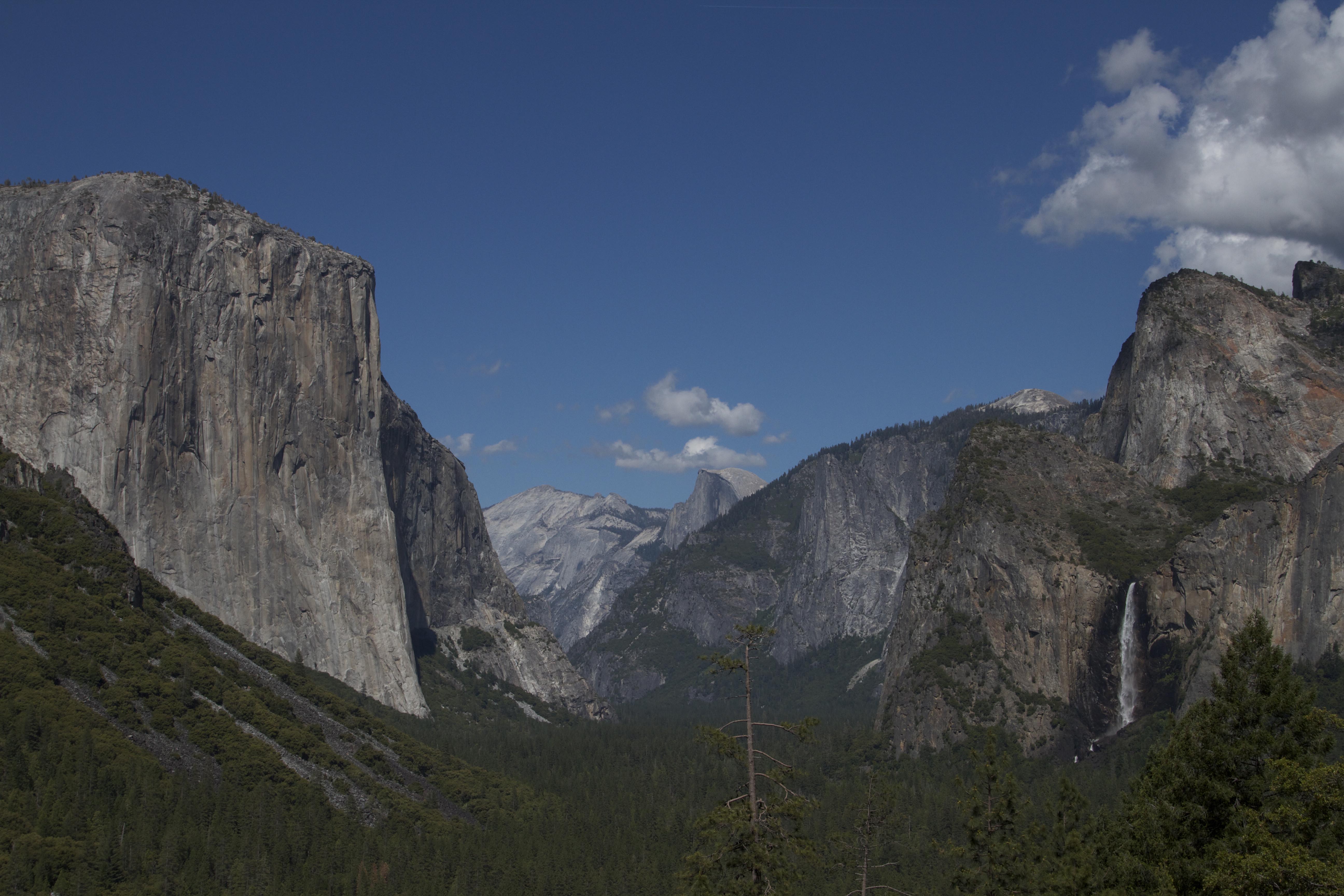
We emerged to that famous Yosemite vista, and suddenly El Capitan and Half Dome were there before us.
Photographs simply don’t prepare you for that first encounter.
You can see the images. You can study the landscapes. You can know what you’re about to see.
But standing there is something else entirely.
Majestic doesn’t begin to describe it.
And, of course, my camera was with me.
It was essentially with me 24/7 during the entire trip.
I had recently graduated from the Rebel T1i to the EOS 7D, and Yosemite became a massive playground for my growing interest in photography.
I wasn’t simply taking vacation pictures anymore.
I was experimenting.
Learning to See
By this point, photography had become a genuine passion.
That was something new for me.
I had always had cameras around me, but I had never really thought of photography as something I could become passionate about. Now I was actively trying to learn.
I began studying field guides specific to the cameras I owned, looking for experimental settings based on what I wanted to accomplish. I was reading about lighting techniques and experimenting with shutter speeds, depth of field and different approaches to composition.
I didn’t want to simply memorize the “exposure triangle.”
I wanted to understand it.
I wanted to know how changing one setting affected another, why a particular combination produced a certain result, and how those decisions ultimately affected the photograph.
I was learning by doing.
And Yosemite gave me almost unlimited opportunities to practice.
There were mountains.
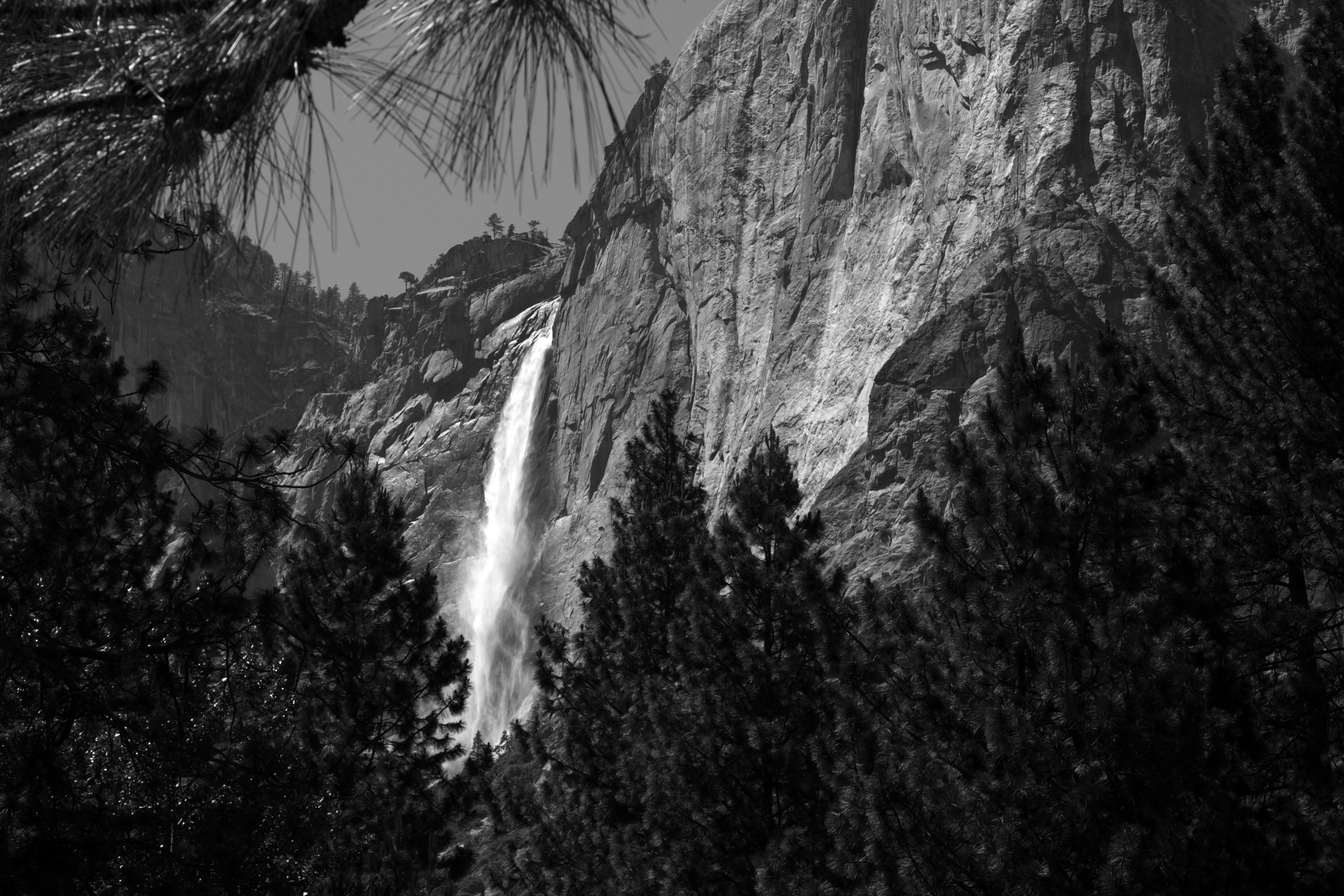
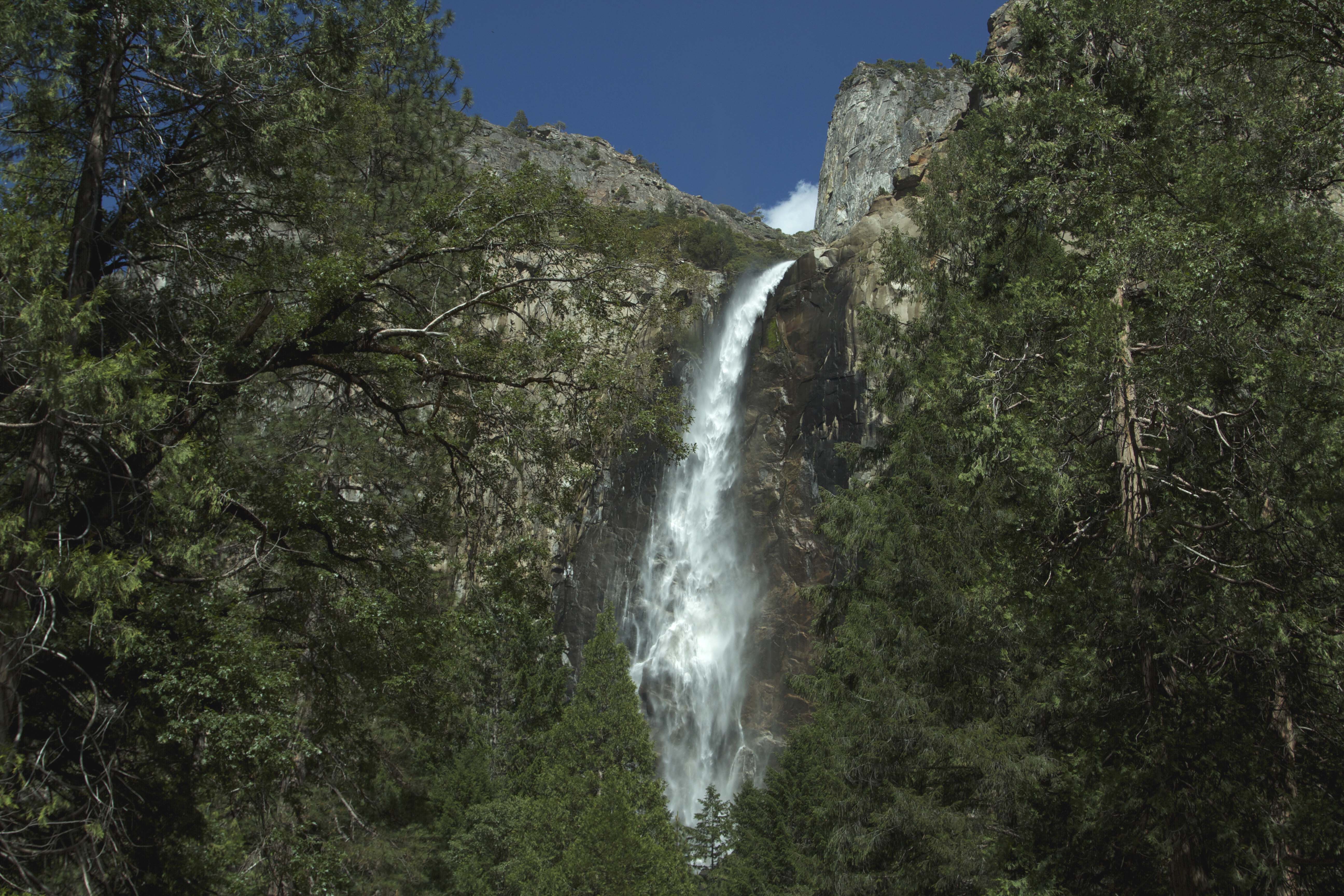
Waterfalls.
Forests.
Streams.
Wildlife.
Architecture.
And light that changed by the hour.
Everywhere I looked, there was another photograph waiting to be made.
Finding My Way Around the Valley
One of the first things you learn in Yosemite is that altitude can change the way you experience even the simplest walk.
A trail that might have seemed easy at home could leave me surprisingly winded.
Still, there were trails everywhere, many following the feeder streams that wound through the valley. We made a point of seeing as much as we could.
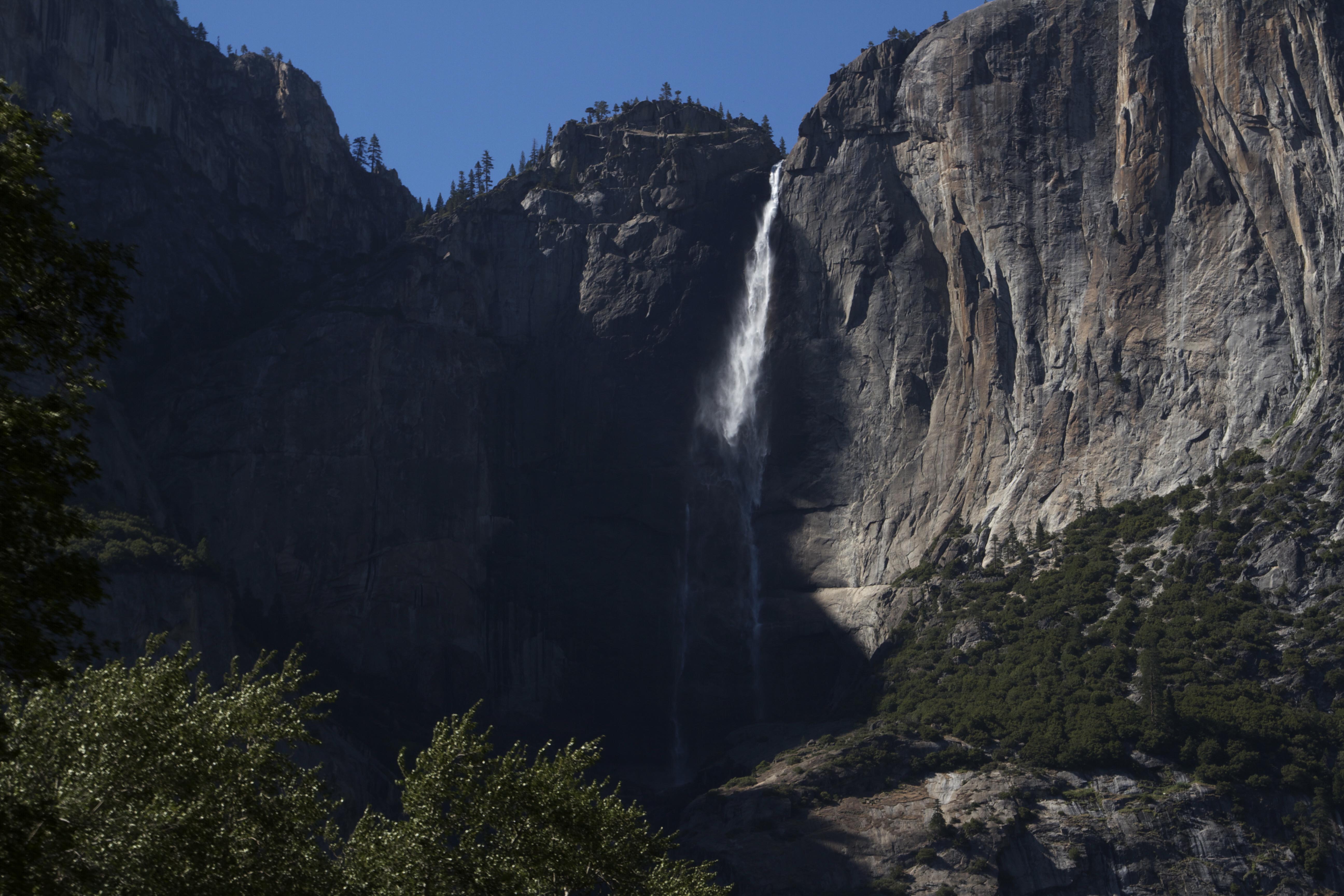
We visited the foot of Horsetail Falls, explored the surrounding trails and took in the enormous granite formations that made Yosemite so famous.
One of the most fascinating sights wasn’t even something I photographed during the day.
At night, we could look toward El Capitan and see tiny lights scattered across the enormous granite face.
They were climbers settling in for the night.
From where we stood, those lights looked impossibly small against the mountain.
It was another reminder of the scale of Yosemite.
A Wedding in the Valley
The wedding itself was intentionally not the focus of my photography from the trip.
It was, after all, the reason we were there, but my story was becoming something larger.
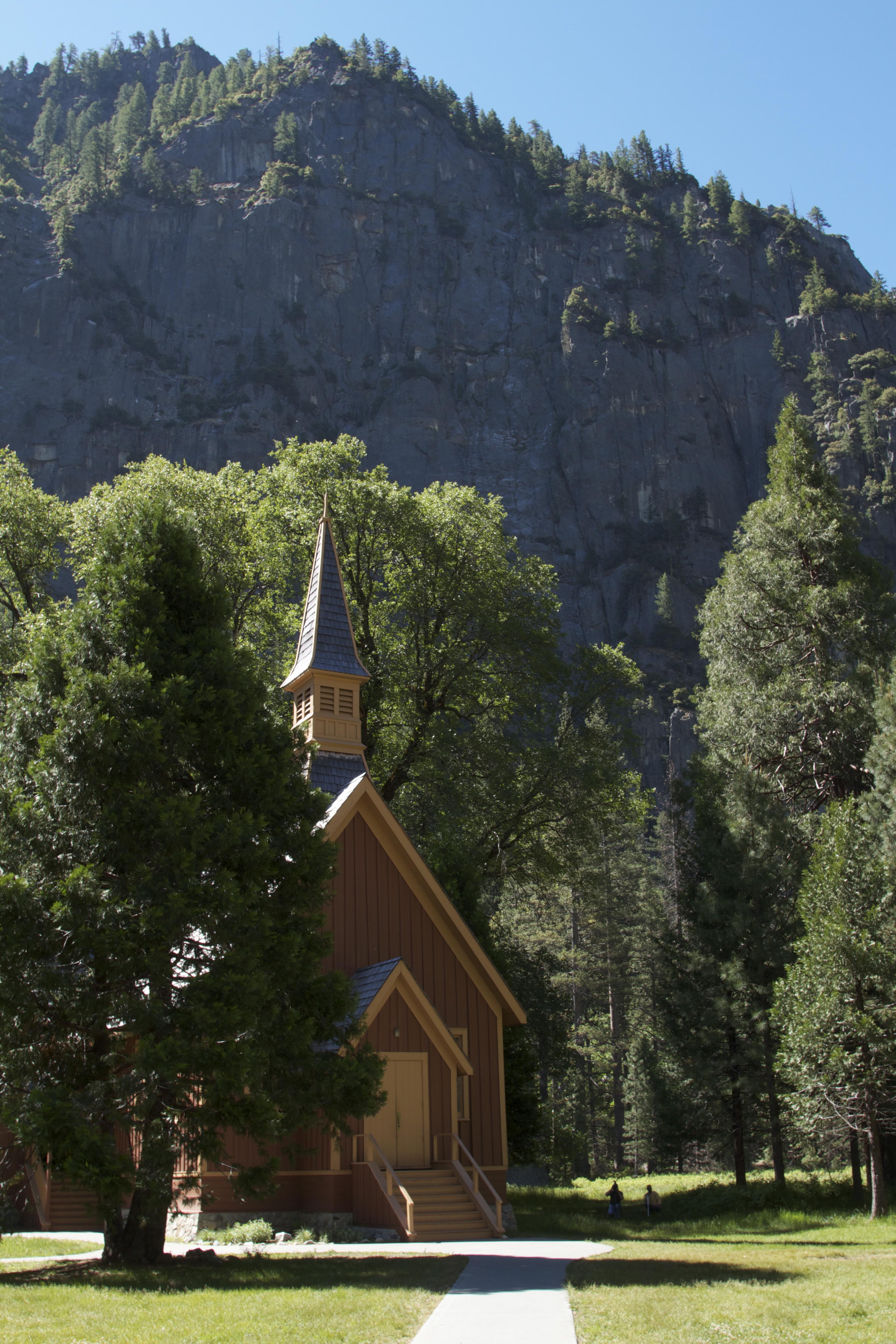
Patrick and Melanie exchanged their vows at a quaint chapel in Yosemite Valley. We passed the chapel several times as we explored the area, so seeing it transformed into the setting for their wedding made it even more meaningful.
For a few moments, the camera wasn’t about landscapes or wildlife.
It was about my best friend.
Still, I wanted the Yosemite experience to remain at the heart of the story.
And it did.
Mariposa Grove
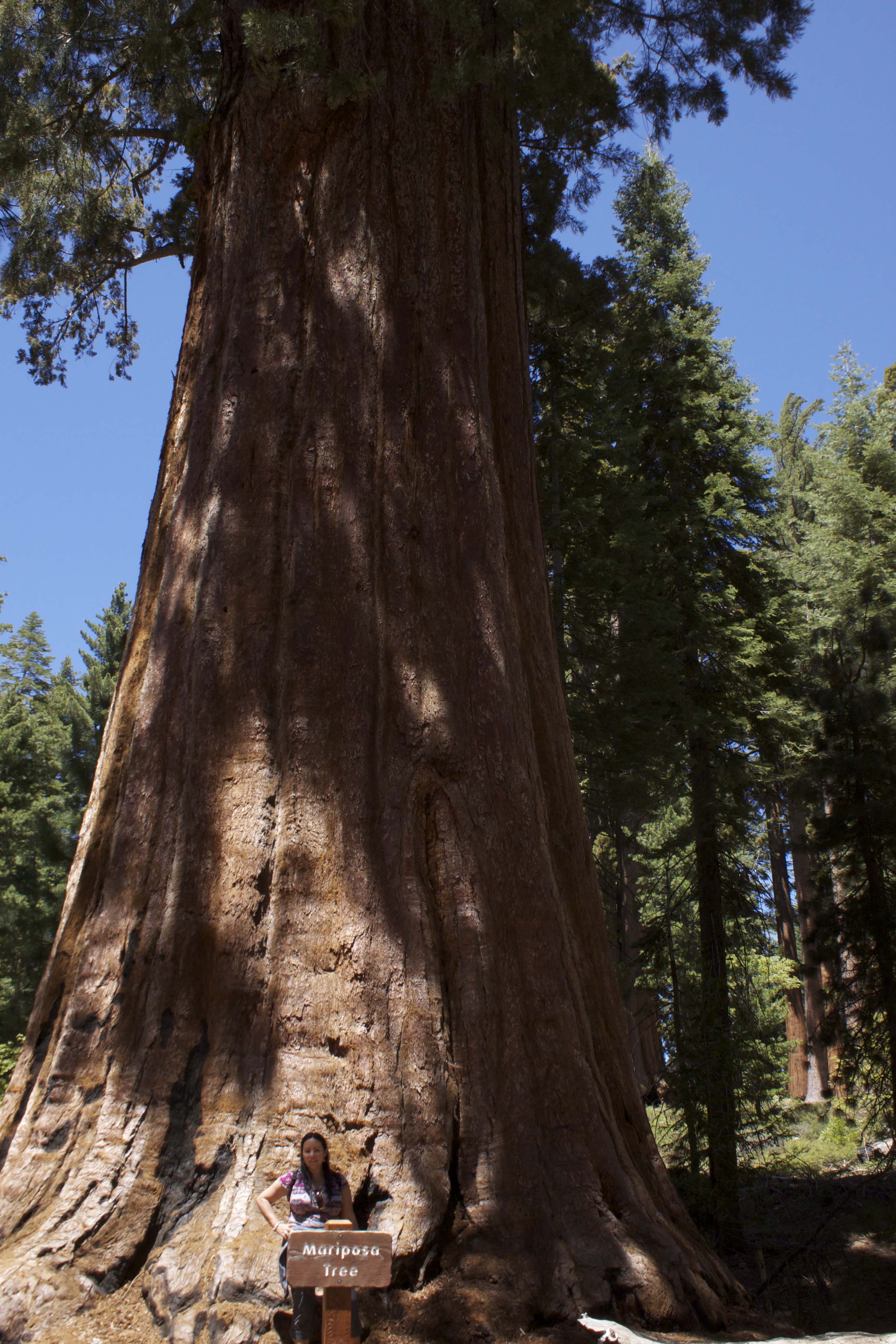
Another memorable excursion took us into the giant sequoias of Mariposa Grove.
The immensity of those trees was almost impossible to comprehend.
Photographs can show you a giant tree, but they don’t necessarily communicate its scale.
That’s why one of my photographs includes a person standing at the base of one of the enormous trees. Suddenly, the size becomes obvious.
The trees seemed to go on forever.
We walked along wooden boardwalks that wound through the grove, making the journey a little easier on the legs—and, at that elevation, easier on the breathing as well.
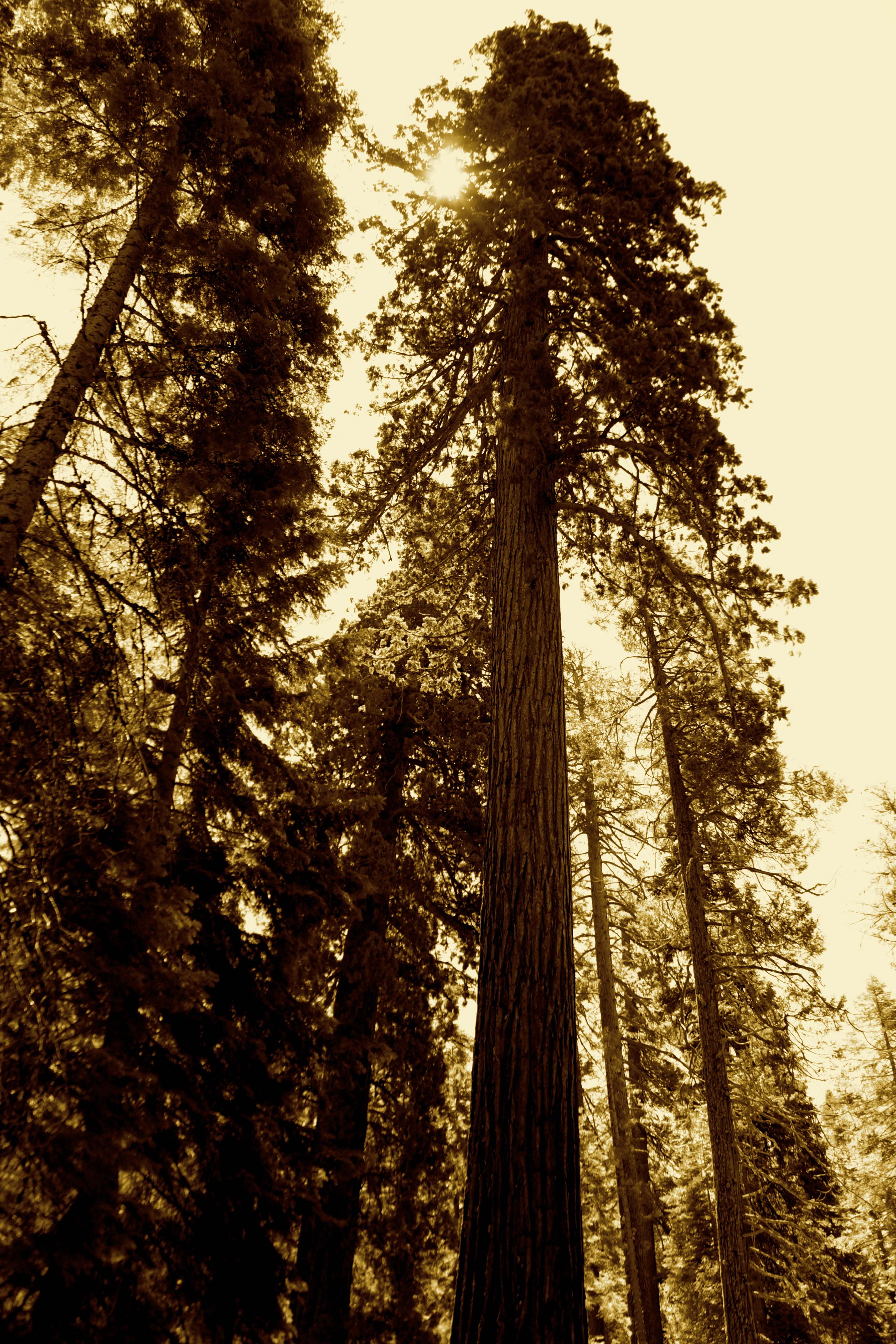
I photographed the trees from different perspectives, including looking upward through the canopy and into the sunlight.
Again, I was experimenting.
I wasn’t simply photographing a tree.
I was trying to figure out how I wanted to photograph a tree.
When Rose Headed Home
Eventually, the time came for Rose to return to New York.
We had always known that would happen. Our schedules simply didn’t allow us to leave Yosemite together.
Rose had already returned to New York by the time I reached Glacier Point. We had both known from the beginning that our schedules wouldn’t allow us to leave Yosemite together, but exploring without her felt different.
I was excited to have the extra time with my camera, yet I couldn’t help wishing she were there to experience it with me.
But there was still more Yosemite to see.
And my camera was ready.
Glacier Point
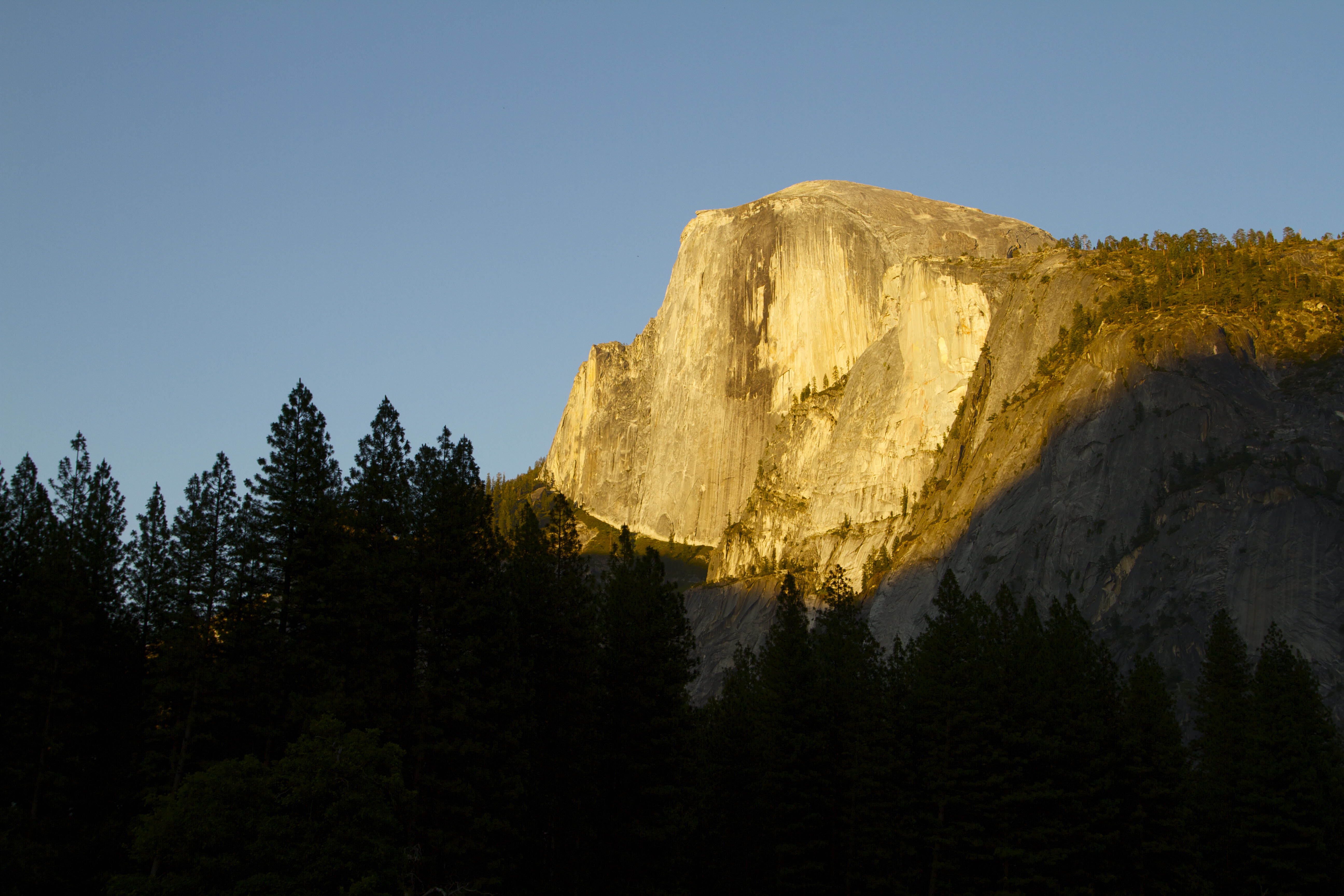
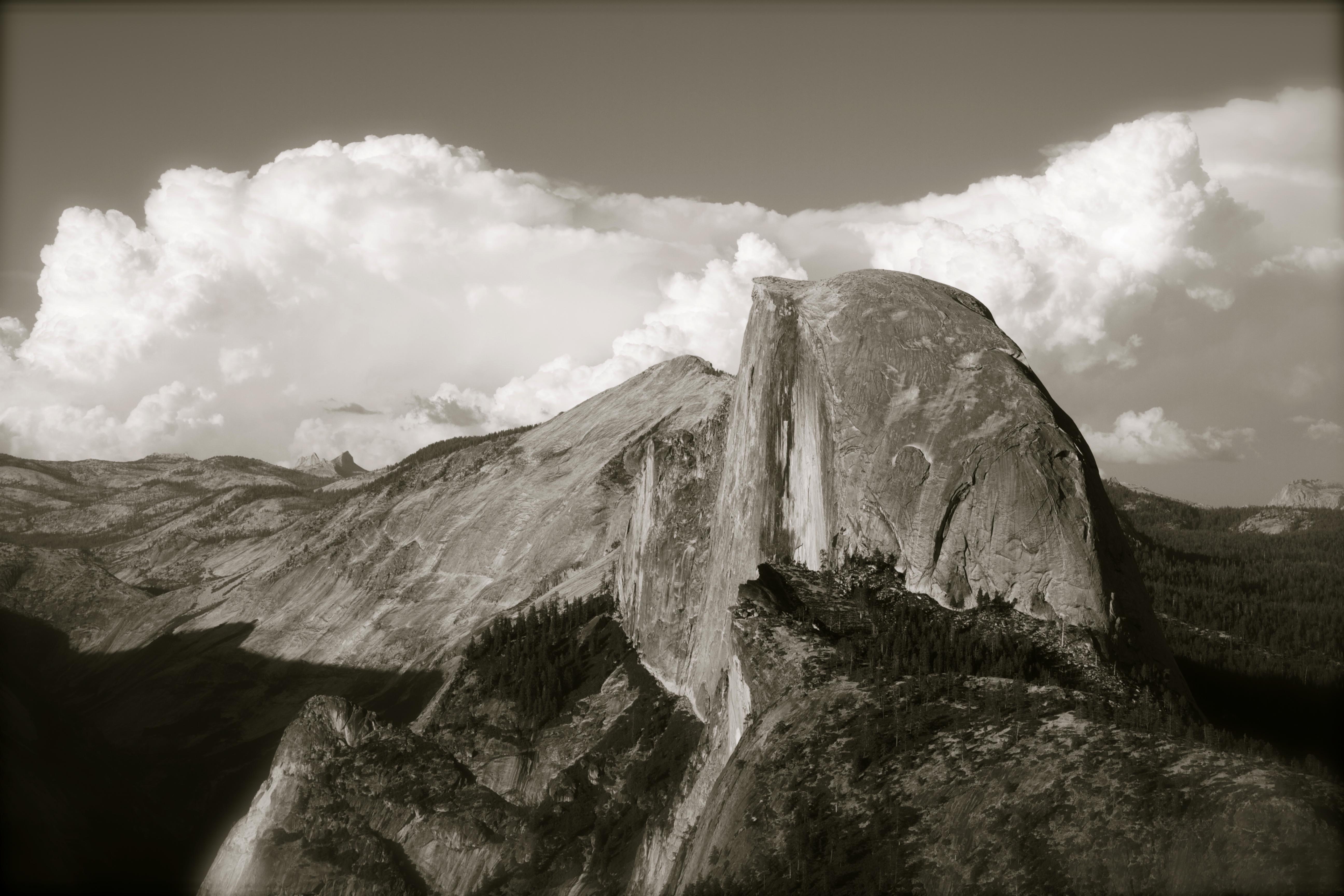
Glacier Point provided an entirely different perspective of Half Dome.
From that elevation, the familiar granite formation took on a completely different appearance, and I spent time photographing it from different angles.
Among the images I made was a black-and-white photograph of Half Dome that would eventually become one of the images I remembered most from the entire trip.
At some point afterward, someone on Facebook compared the photograph to the work of Ansel Adams.
I wish I could remember who made the comment.
After all these years, I don’t.
But I remember how it made me feel.
I certainly wasn’t suggesting that I belonged in the same league as Ansel Adams. He was one of the greatest landscape photographers who ever lived.
But hearing that someone saw something in one of my photographs that reminded them of Adams did something to me.
It fueled my passion.
It made me want to learn more.
It made me want to keep experimenting.
And it reinforced something I was beginning to understand: photography wasn’t simply about owning a better camera.
It was about learning how to see.
Maybe Wildlife Was My Calling
If landscape photography was one possibility, Yosemite soon introduced me to another.
Wildlife.
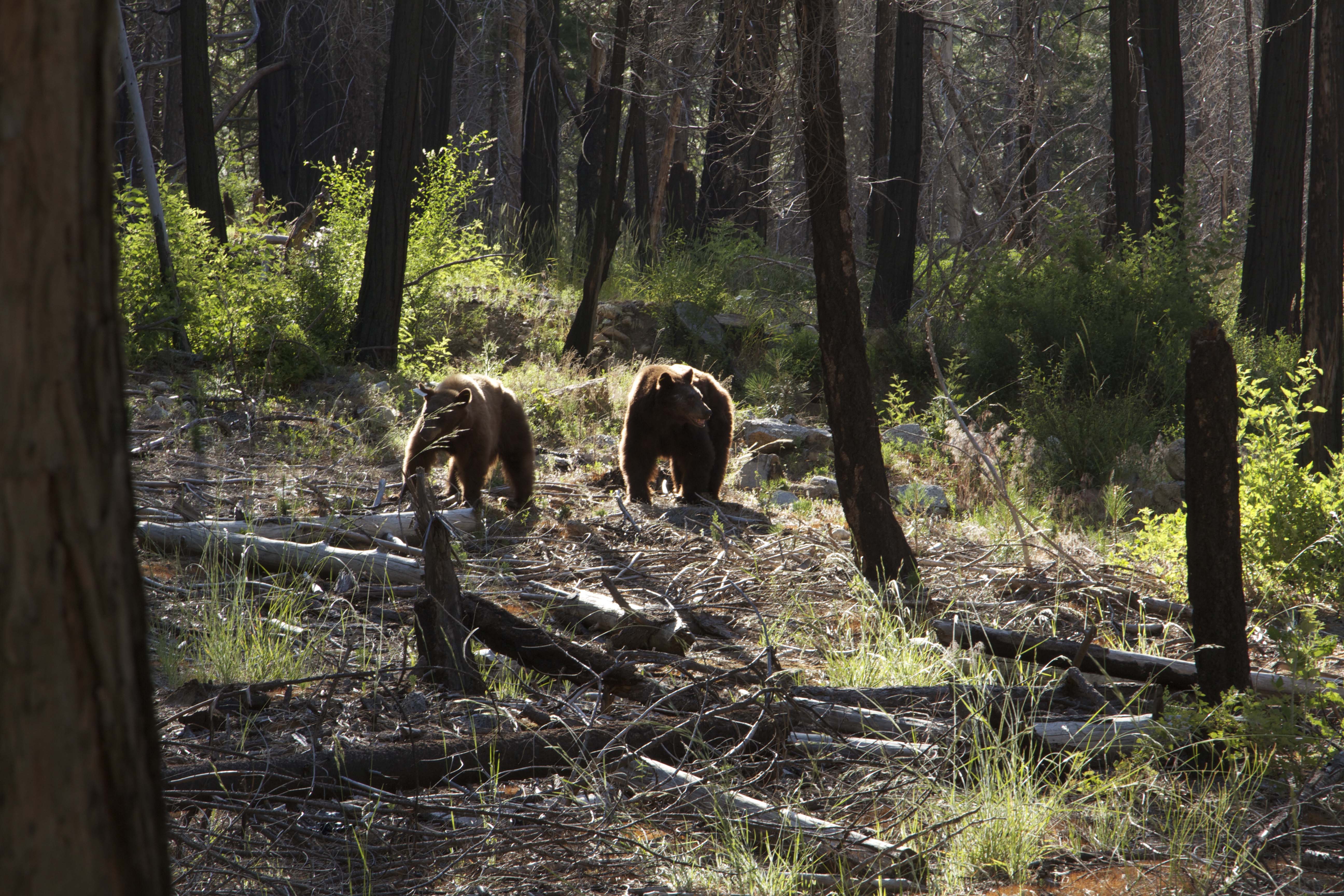
During our time there, we encountered only two bears—a mother and her cub.
But they were enough to get my attention.
As we were leaving Yosemite Valley, it was a beautiful day for photography when we came across them. People began pulling their cars over to get a glimpse.
Fortunately, nobody seemed determined to become part of the wildlife themselves.
There weren’t any “knuckleheads” climbing out of their vehicles to get a better look like you sometimes see in Yellowstone!
The bears remained where they were, and I remained where I belonged—with my camera safely in hand and my vehicle between me and them.
But I couldn’t help thinking:
Maybe I’m going to become a wildlife photographer.
Then Yosemite gave me another opportunity to test that theory.
The Coyote
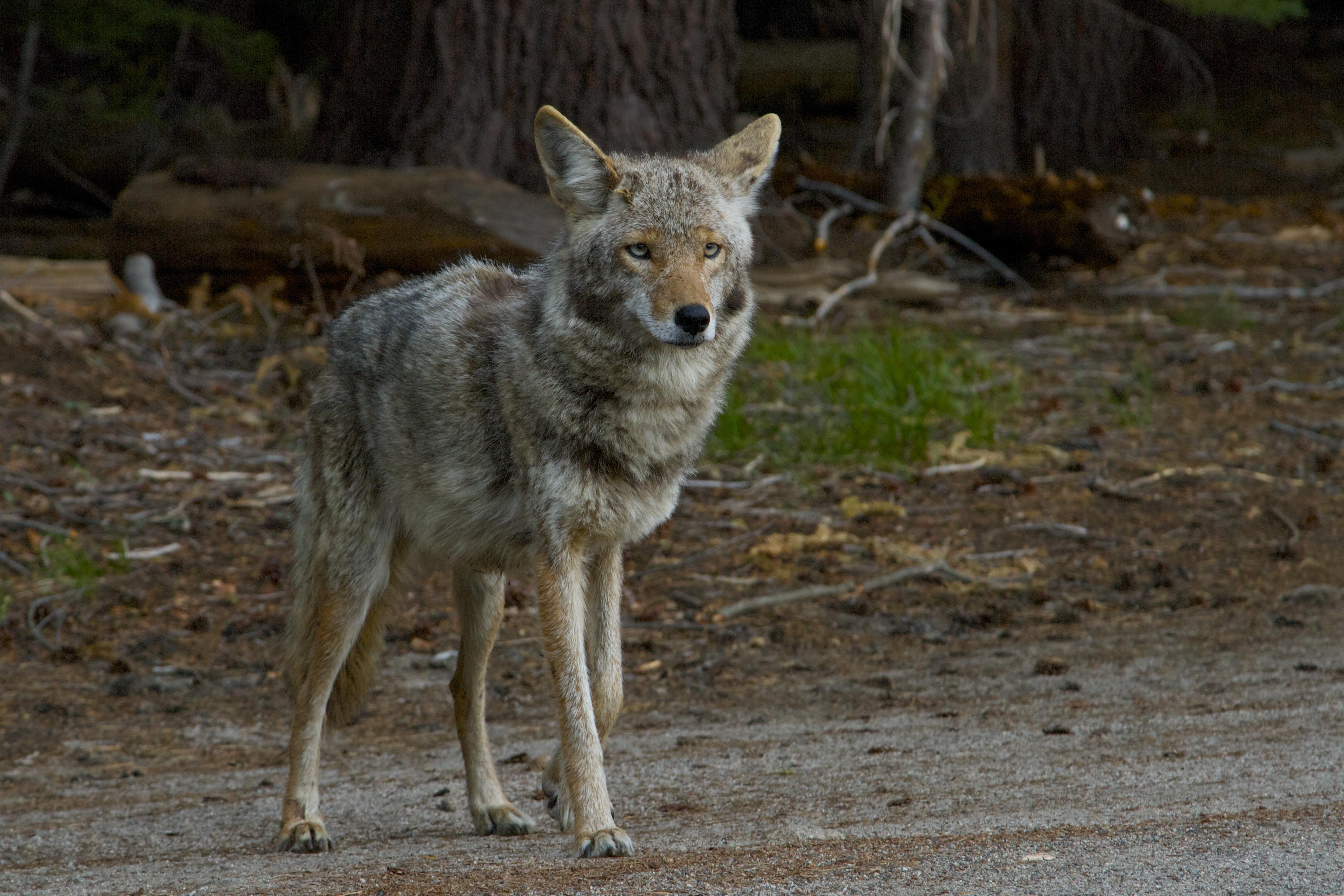
A couple of days later, after Rose had returned home, we encountered a coyote.
And apparently, this particular coyote had a better understanding of traffic safety than some humans do.
He was waiting patiently for traffic to pass.
I had my camera ready.
The resulting photograph captures him standing there, seemingly watching everything around him.
It was another unexpected wildlife encounter, and another reminder that Yosemite had a way of providing photographic opportunities when you weren’t necessarily looking for them.
For a photographer searching for his niche, it was almost too convenient.
First the bears.
Then the coyote.
Maybe wildlife really was where I belonged.
Beyond Yosemite Valley
After our time in the valley, Patrick and I continued our journey.
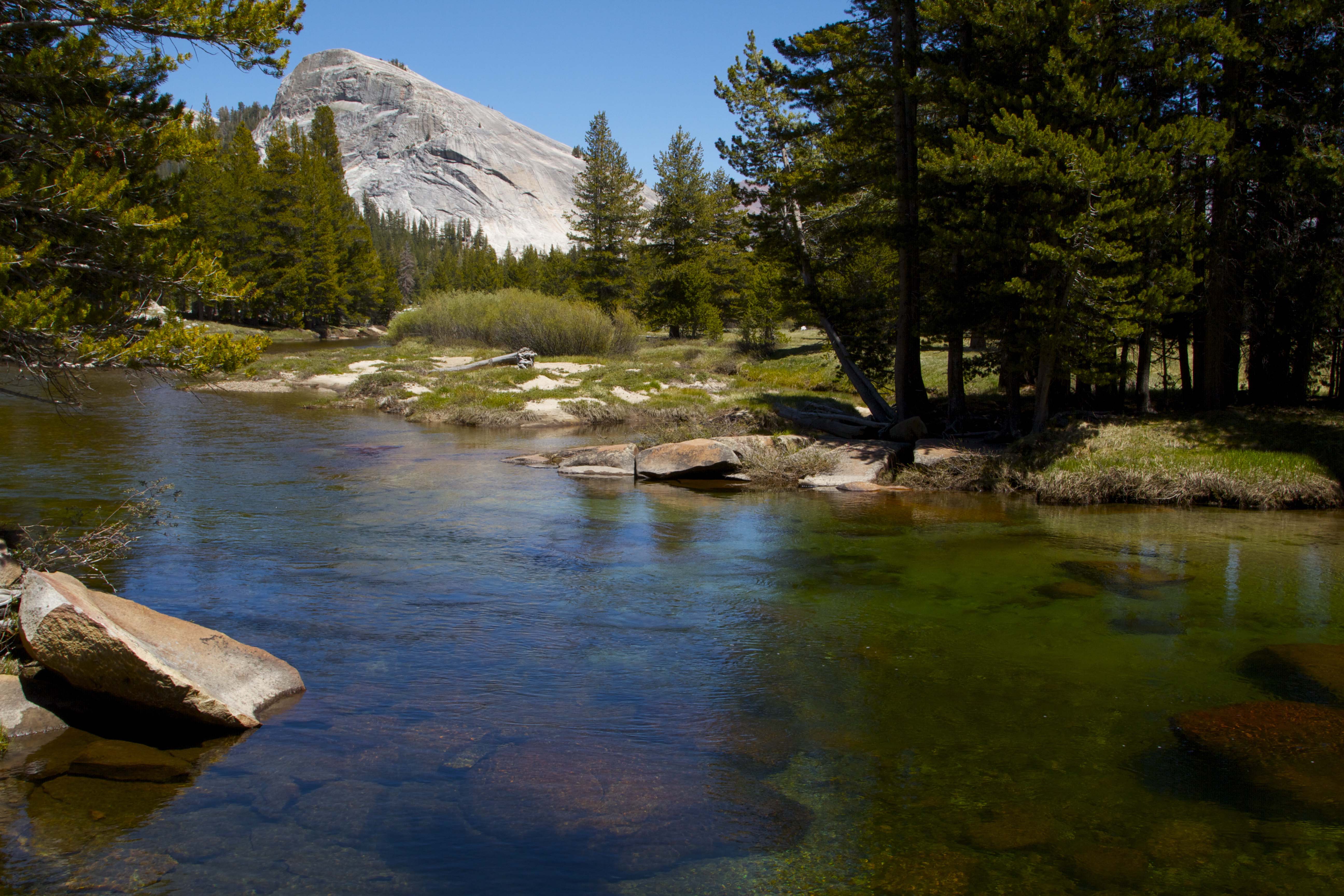
We headed toward Tuolumne via Tioga Pass, passing Tenaya Lake along the way.
The scenery changed as we climbed, but the grandeur never really stopped.
Eventually, we decided to spend the night at White Wolf Lodge.
The rustic setting was exactly what I expected from Yosemite. Our canvas cabin even had a small wood-burning stove.
After dinner, we began walking back toward our cabin while other guests were enjoying the community campfire.
Then Pat decided to stir the coals.
And stir them he did.
The logs had been stacked in a cross-hatch formation. When Pat poked one of them, the short pile collapsed.
No one was hurt and nothing was damaged, but the other campers couldn’t resist letting out a chorus of boos.
It was all in good fun, and we all had a laugh.
Once again, it wasn’t necessarily the spectacular scenery that created the memory.
Sometimes it was simply being there with an old friend.
Wawona
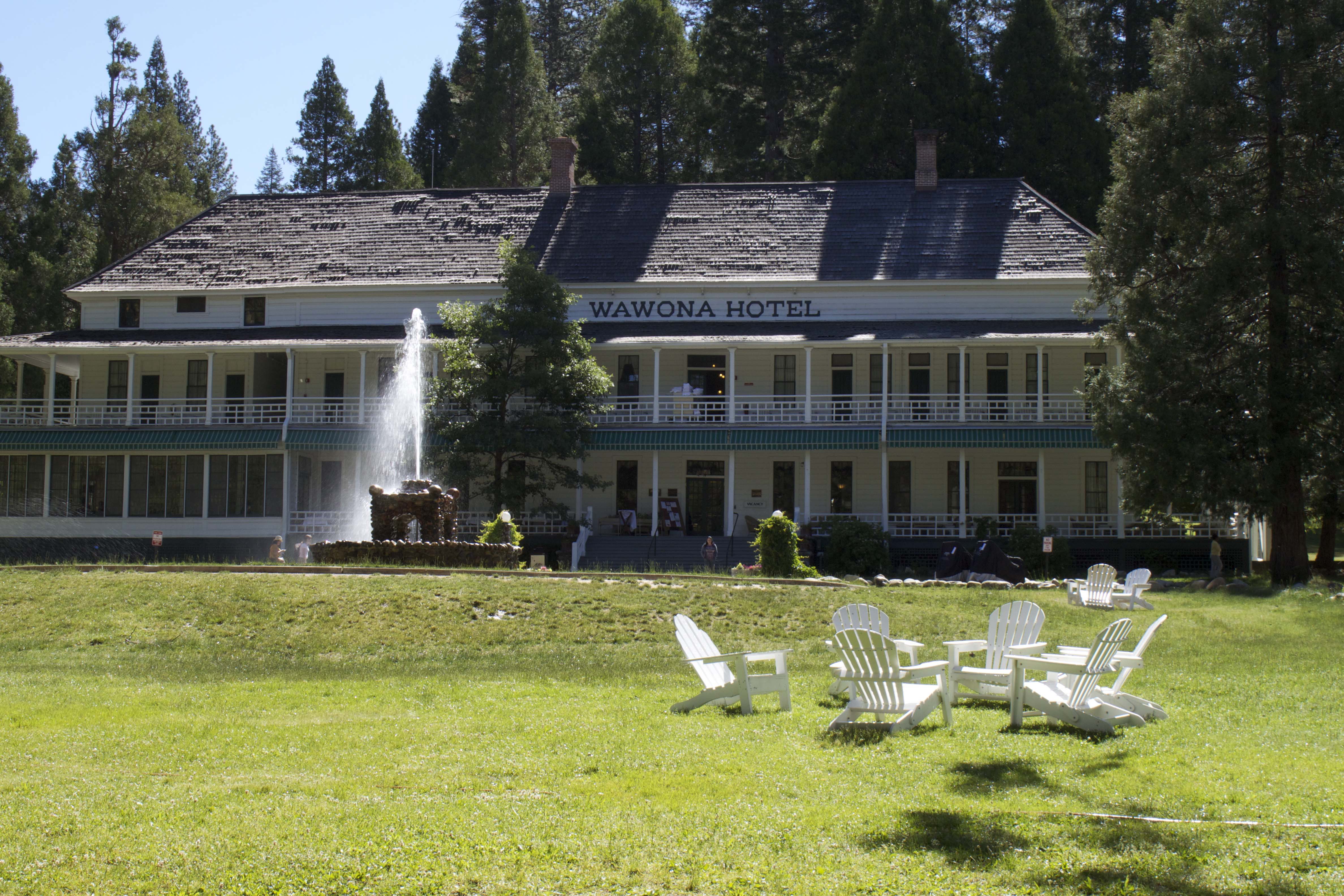
After our days of camping, we packed up and headed to the Wawona Hotel.
Melanie’s parents stayed behind at the campground to dismantle the tents and pack everything away.
Wawona was a completely different experience from our days under canvas.
The historic hotel, with its white exterior, long verandas and expansive lawn, seemed to belong to another era.
It was also where Patrick and Melanie’s wedding reception was held.
After days of tents, campfires, hiking and exploring, we suddenly found ourselves surrounded by the charm of a historic hotel.
It was a fitting contrast to the rustic beginning of the trip.
A Thousand Photographs Later
I returned from Yosemite with more than a thousand photographs.
Fifteen years later, I don’t remember every detail.
Some moments have faded. Some locations have blurred together. There are things I know happened that I can no longer place with absolute certainty.
But the photographs remain.
And that’s one of the things I love about photography.
Sometimes the camera remembers what we don’t.
Looking through those photographs now, I see a younger photographer who was still trying to figure things out.
I see someone experimenting with landscapes.
Wildlife.
Waterfalls.
Architecture.
Black and white.
Color.
Light.
Perspective.
I see someone who wasn’t interested in simply memorizing photographic rules. I wanted to understand them.
I wanted to know why a photograph worked.
And sometimes, looking back, I realize that I actually got it right.
The Half Dome photograph from Glacier Point is one of those images.
The bears are another.
The coyote.
The waterfalls.
The giant sequoias.
The chapel.
The Yosemite Valley.
Each photograph represents something I was learning at the time.
Looking Back
The timing of the trip is something I didn’t fully appreciate then.
The photographs begin on June 10, 2012.
A couple of weeks after returning home, I sold my house in Buffalo and moved to Long Island.
In retrospect, Yosemite sits at an interesting point in my life.
I arrived in California as a photographer who was still searching for his niche.
I returned to New York with a deeper passion for photography.
And then, almost immediately, my life changed.
Buffalo was behind me.
Long Island was ahead.
And I had no idea what photography would eventually become.
Today, I photograph concerts and musicians. I document stages, venues and performances. I’ve photographed artists I once never imagined I’d have access to. I’ve created Long Island Sounds and developed Exploring with Rob as a place to share experiences beyond the concert stage.
But before all of that, there was Yosemite.
There was a new EOS 7D in my hands.
There were field guides spread across the table.
There were experiments that worked and plenty that didn’t.
There were waterfalls where I was learning how to work with motion.
There were wildlife encounters that briefly convinced me I might become a wildlife photographer.
And there was Half Dome, sitting in the distance from Glacier Point, waiting for me to discover what I could do with a camera.
Yosemite had been on my bucket list because I loved nature and wanted to photograph it.
What I didn’t fully understand at the time was that I wasn’t simply exploring Yosemite.
I was exploring myself.
I was beginning to discover what photography meant to me.
And perhaps that’s why, fifteen years later, these photographs still matter.
The landscape has changed.
The technology has changed.
My cameras have changed.
My photography has changed.
But the desire to look, to explore and to capture what I see has never gone away.
I always had a camera.
I just didn’t know what it was for.