Père-Lachaise Cemetery — Where Music, Art, History and Memory Rest
Is it morbid to have a bucket list that includes visiting the graves of famous people?
Or, more specifically, musical gods?
I’ve thought about that more than once.
There are certain musicians whose music has become such an important part of my life that, given the opportunity, I’d love to pay my personal respects. Jimi Hendrix. Stevie Ray Vaughan. Gary Moore. Phil Lynott. Randy Rhoads. Eddie Van Halen. Neil Peart.
And yes… did I just forget to mention Elvis?
Maybe there’s something a little strange about making a pilgrimage to a cemetery because someone whose music you admired happens to be buried there. But I don’t really see it as morbid. To me, it’s about appreciation. These are people whose music became part of the soundtrack of our lives. Visiting their final resting places is simply another way of acknowledging what they left behind.
So when Rosemary and I visited Père-Lachaise Cemetery in Paris, France, I had one name in mind.
Jim Morrison.
I certainly wasn’t expecting to cross anyone else off my bucket list.
A City of the Dead… and the Living
I’ll admit something else.
I love cemeteries.
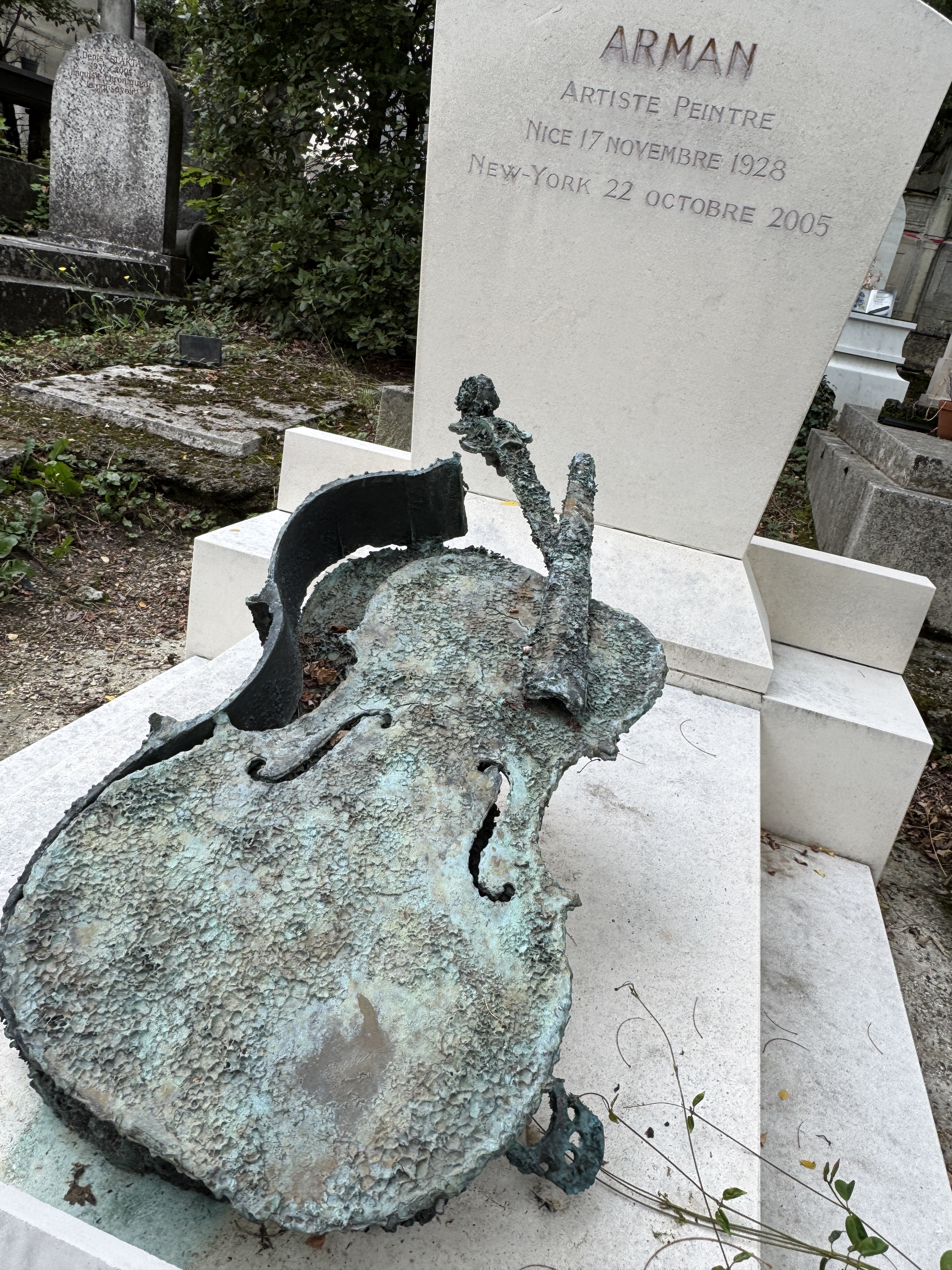
I know that probably sounds a little strange, but I’ve always found them fascinating. They can be beautiful, rustic, weathered, mysterious, peaceful and, dare I say, majestic. There is something about walking among centuries-old monuments and realizing that every name represents a life, a family, a story.
Père-Lachaise takes that feeling to another level.
Opened in 1804, the cemetery was originally known as the Cemetery of the East. Today, it encompasses roughly 43 hectares, with approximately 70,000 burial sites and miles of winding pathways. It is both an active cemetery and, in many respects, an open-air museum of sculpture, architecture and history.
And it is enormous.
We grabbed a map when we entered and immediately began looking for Jim Morrison’s grave.
But while studying the map, a few other names caught my attention.
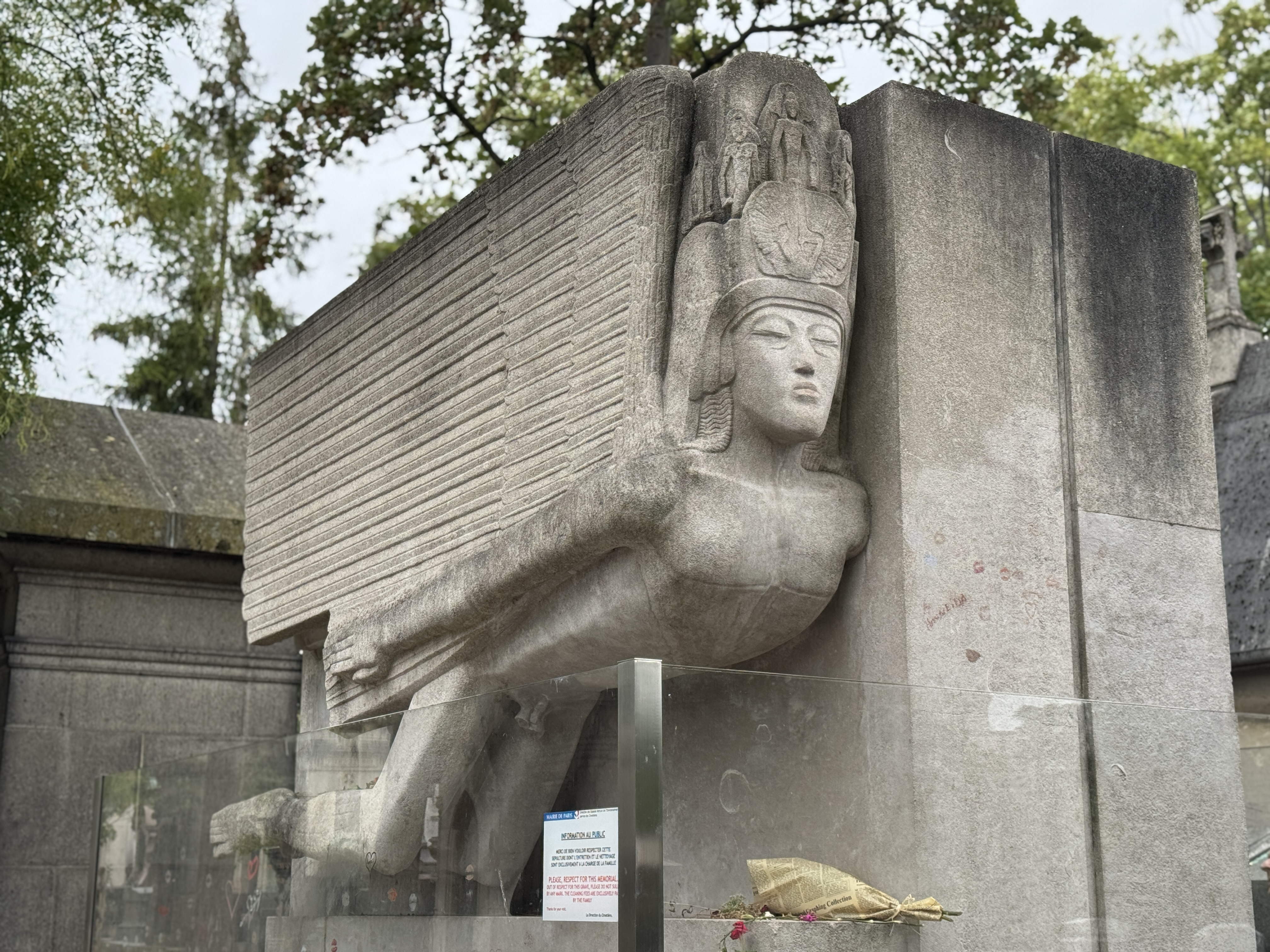
Oscar Wilde.
I had just finished reading The Picture of Dorian Gray shortly before our trip. I knew Wilde’s work, but somehow I had no idea that he was buried here.
That changed our plans.
Then came another familiar name.
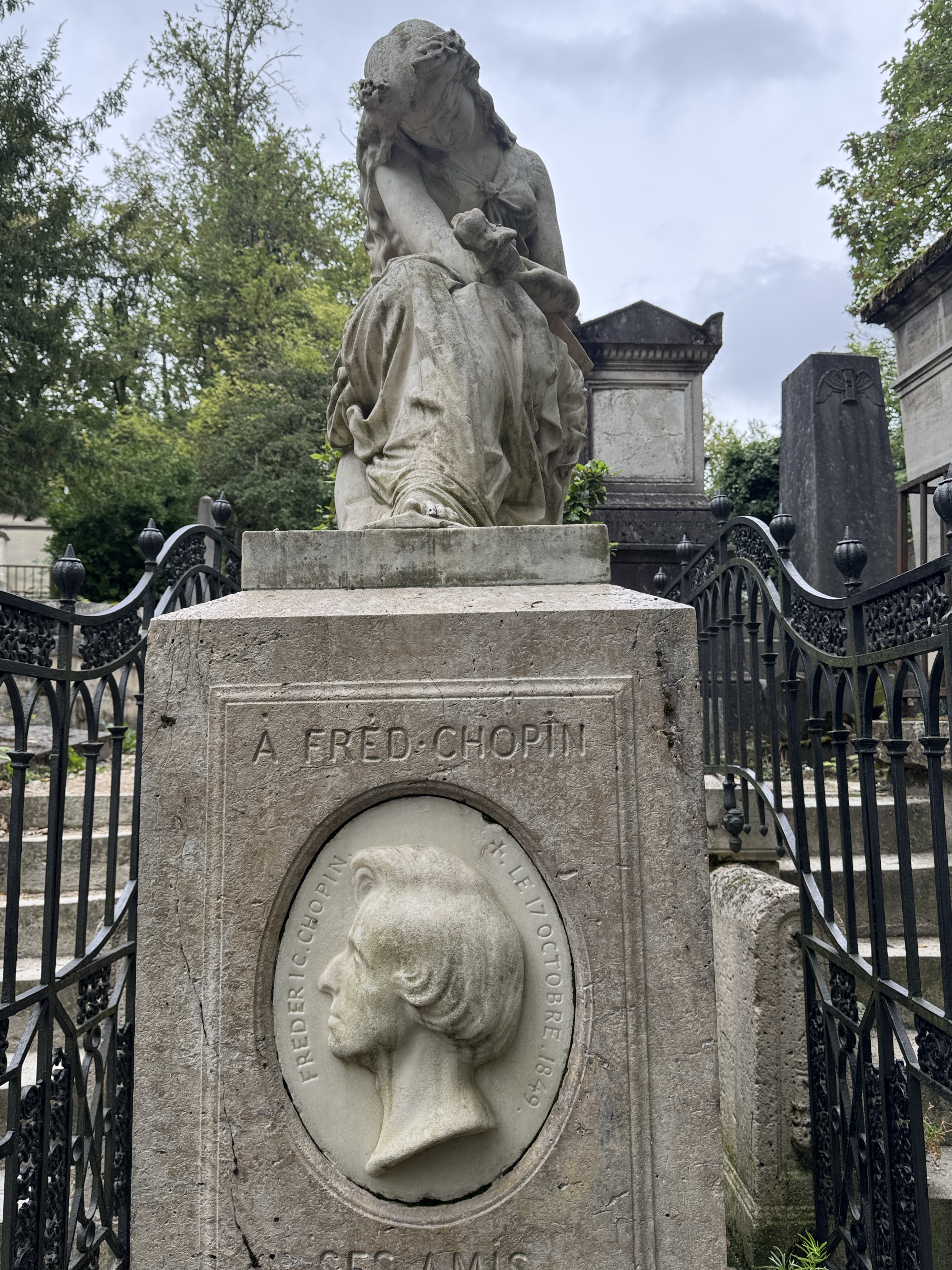
Frédéric Chopin.
As someone who has always appreciated classical music, discovering that Chopin was also resting at Père-Lachaise was an unexpected highlight.
Then there was Édith Piaf, France’s legendary chanteuse, forever associated with La Vie en Rose. Her family grave is among the cemetery’s best-known destinations and is often adorned with fresh flowers.
And then we found Gioachino Rossini, the great Italian composer whose The Barber of Seville remains one of the most recognizable works in opera.
Of course, many Americans probably became familiar with Rossini without ever realizing it.
Bugs Bunny.
How many of us first heard The Barber of Seville while watching Looney Tunes?
That was one of the things I loved about Père-Lachaise. We weren’t simply walking through a cemetery. We were constantly stumbling across connections to literature, music, art, history and even childhood memories.
Rossini’s story here is particularly interesting. His remains were transferred to Florence in 1887, although his original tomb remains at Père-Lachaise.
Our quick visit was becoming anything but ordinary.
The Cemetery That Almost Failed
Père-Lachaise wasn’t always the celebrated destination it is today.
When the cemetery opened in 1804, it was located outside the heart of Paris and initially struggled to attract burials. City officials needed a way to change public perception.
Their solution was remarkably clever.
In 1817, the remains of the legendary lovers Héloïse and Abélard, along with those of writers Molière and Jean de La Fontaine, were transferred to Père-Lachaise.
It worked.
The presence of famous historical figures transformed the cemetery’s reputation. People began wanting to be buried near the cultural icons, and the cemetery’s popularity grew dramatically. By 1830, it contained approximately 33,000 graves.
In other words, Père-Lachaise essentially became famous by becoming the place where famous people were buried.
And that tradition continues today.
The Morrison Pilgrimage
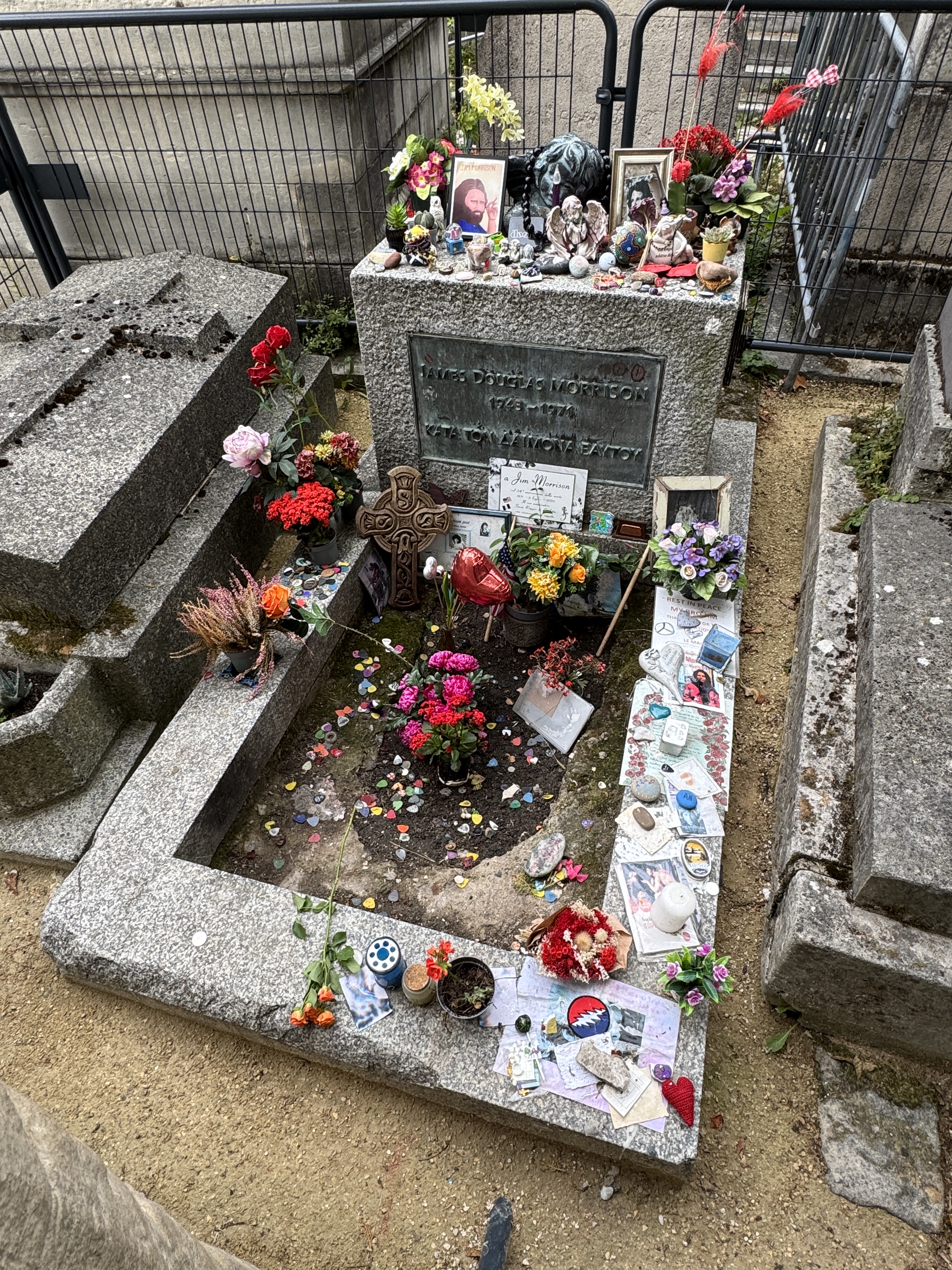
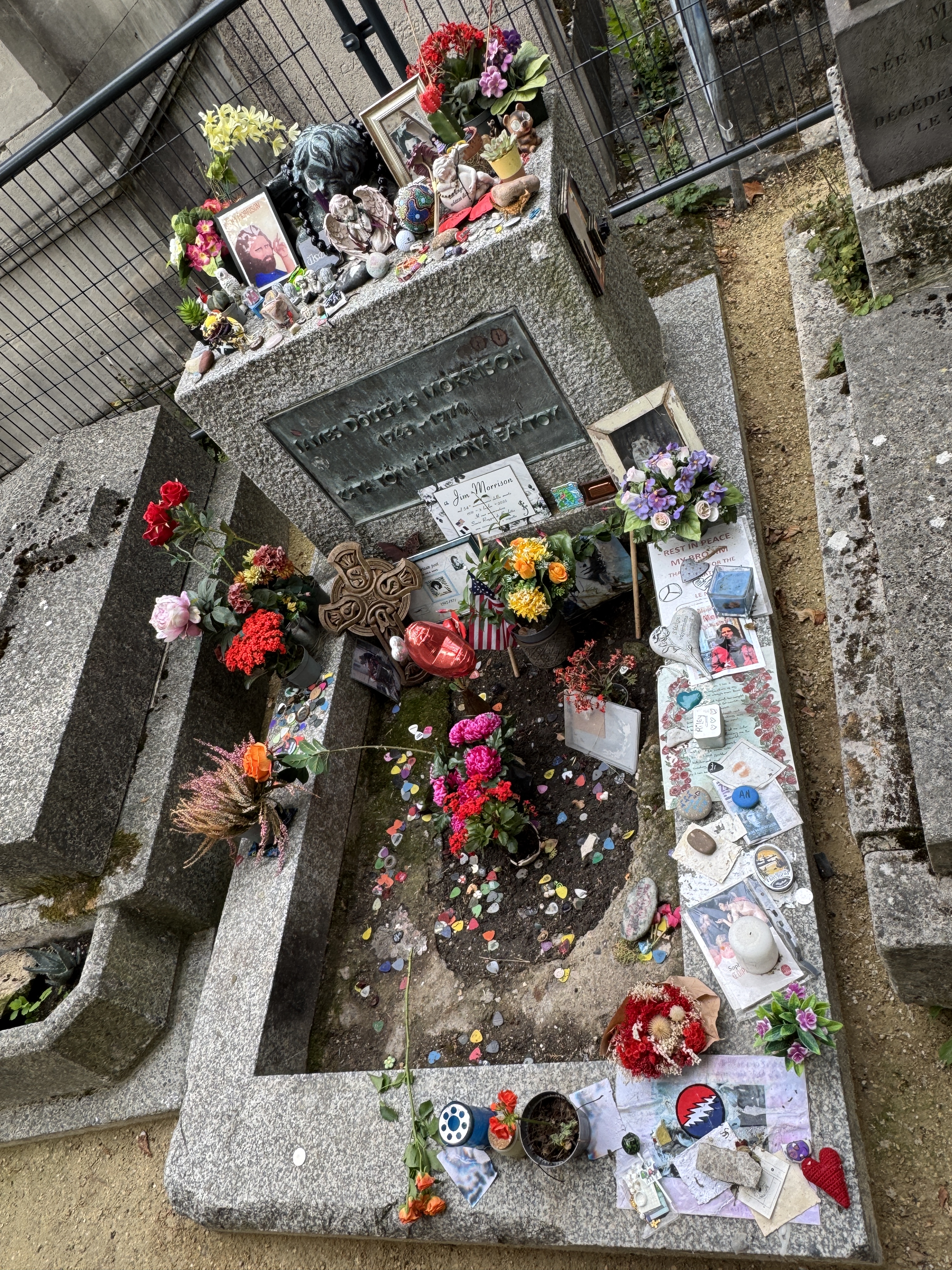
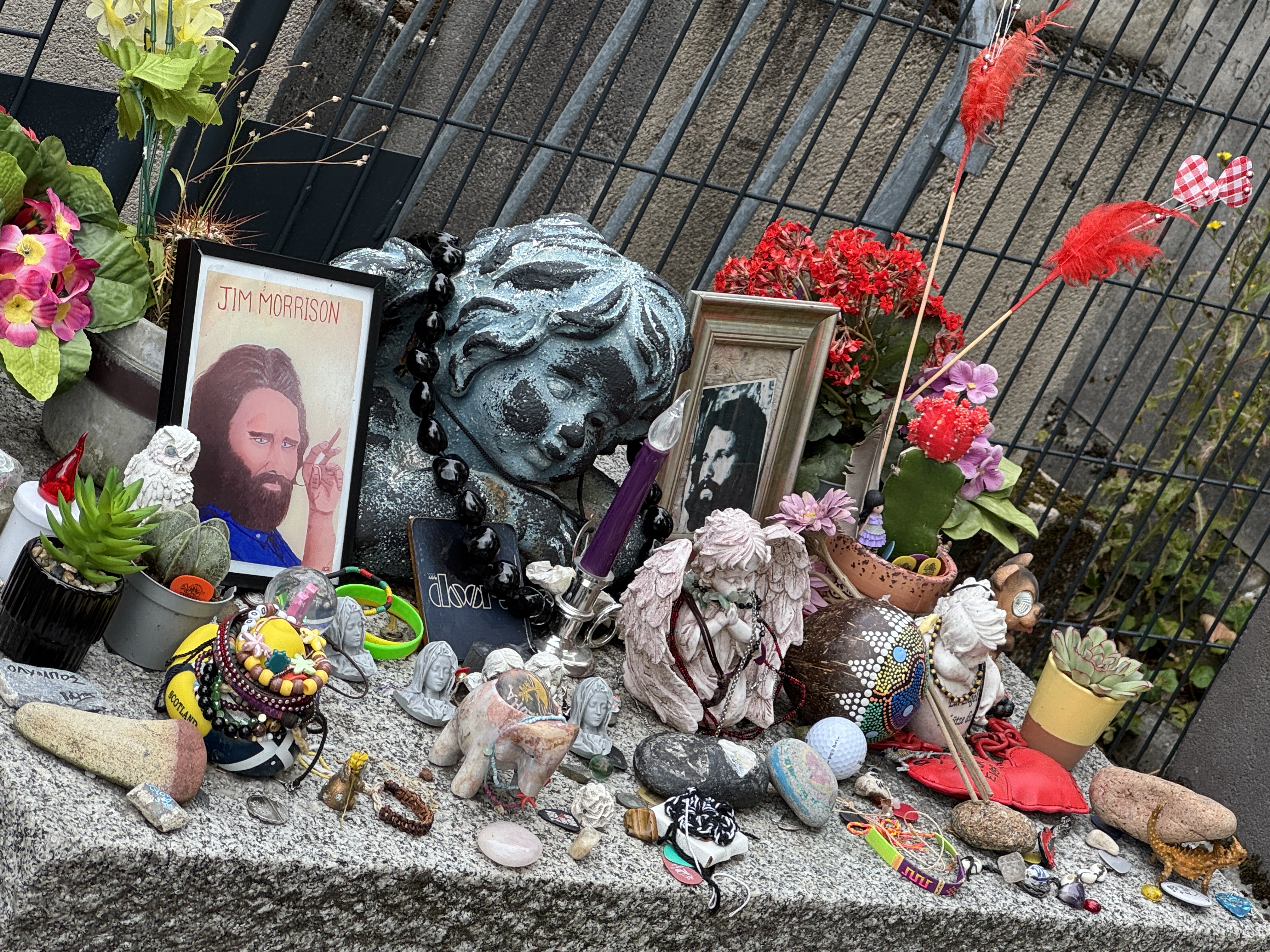
Eventually, we found the grave I had originally come looking for.
Jim Morrison.
There was something surreal about standing there.
For decades, I’d listened to Morrison’s voice. The Doors were part of the musical landscape of my life, and songs such as The End and When the Music’s Over had become much more than simply recordings.
Now I was standing at his final resting place.
Morrison died in Paris on July 3, 1971, at only 27 years old. His official cause of death was recorded as heart failure, and no autopsy was performed. Those circumstances left plenty of room for speculation, and competing accounts of his final hours have fueled theories about everything from a drug overdose to other explanations for his death. Most historical accounts accept that Morrison died in Paris that night, but the precise circumstances remain part of his enduring mystique.
But standing there, I wasn’t particularly interested in solving the mystery.
I was thinking about the music.
And one passage from When the Music’s Over kept coming back to me—the haunting image of Morrison contemplating his own “big sleep” and wanting to hear the scream of the butterfly.
Standing beside his grave, that imagery suddenly seemed almost unsettlingly appropriate.
Did Jim Morrison hear it?
Did he hear the scream of the butterfly?
Of course, we’ll never know.
And perhaps that unanswered question is fitting.
Morrison’s music was filled with mystery, symbolism and questions that weren’t necessarily meant to have easy answers. His life ended at 27, but the questions surrounding his death have continued for more than half a century.
In that moment, When the Music’s Over seemed less like a song and more like an epitaph.
Then the Cemetery Changed
But Père-Lachaise isn’t simply a destination for music fans, literary pilgrims and history buffs.
As we continued walking, we encountered another side of the cemetery that changed the mood completely.
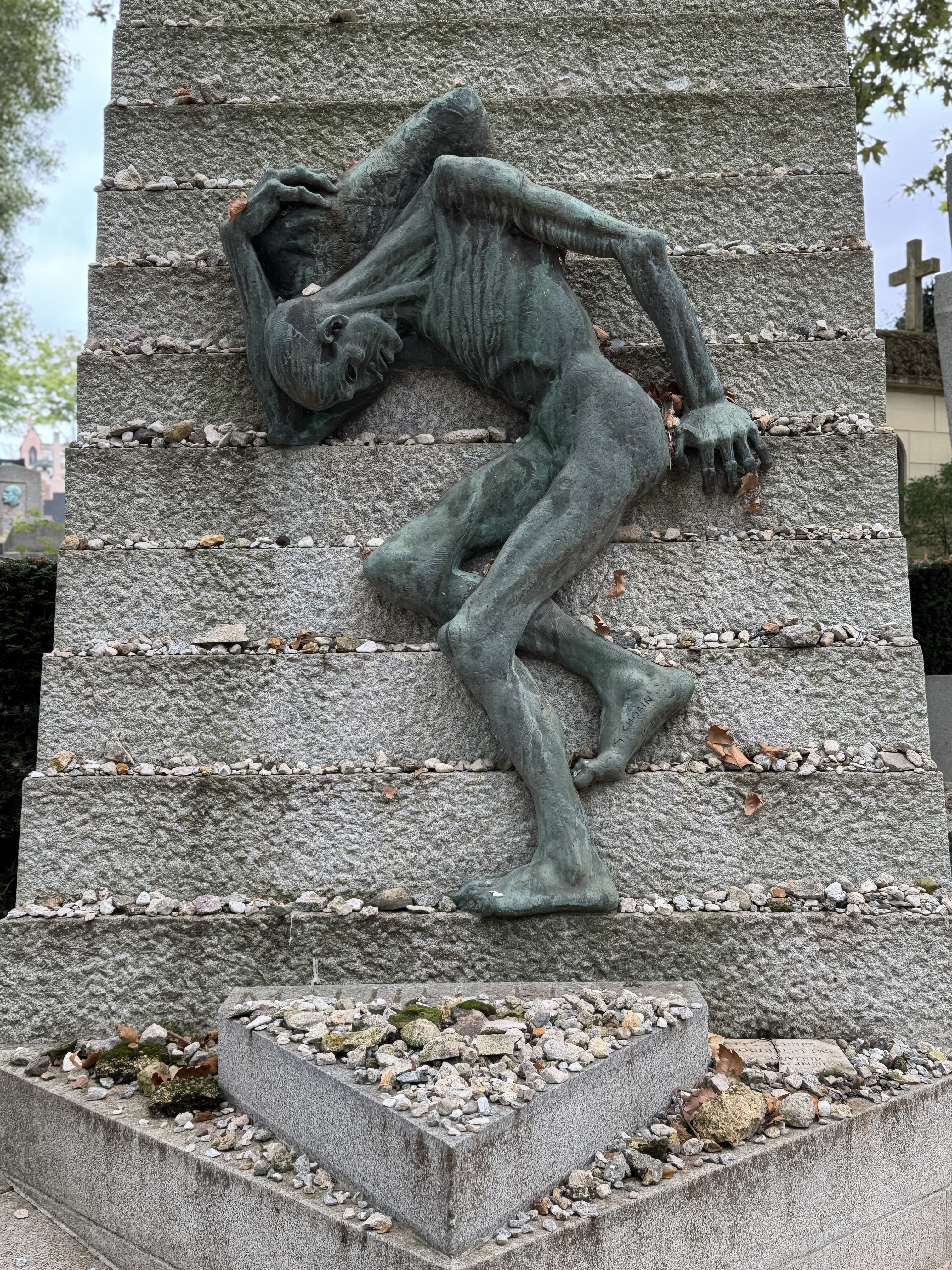
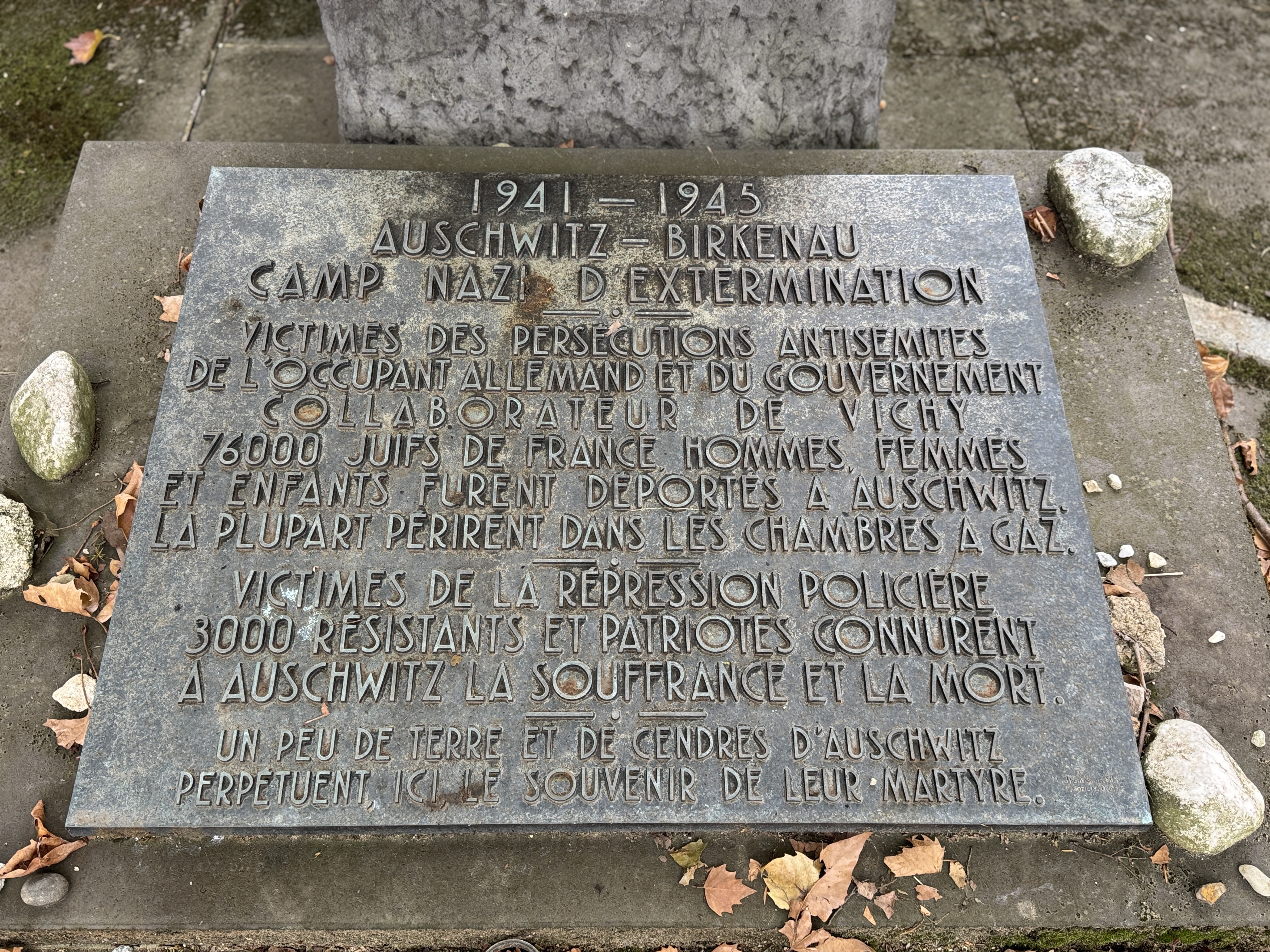
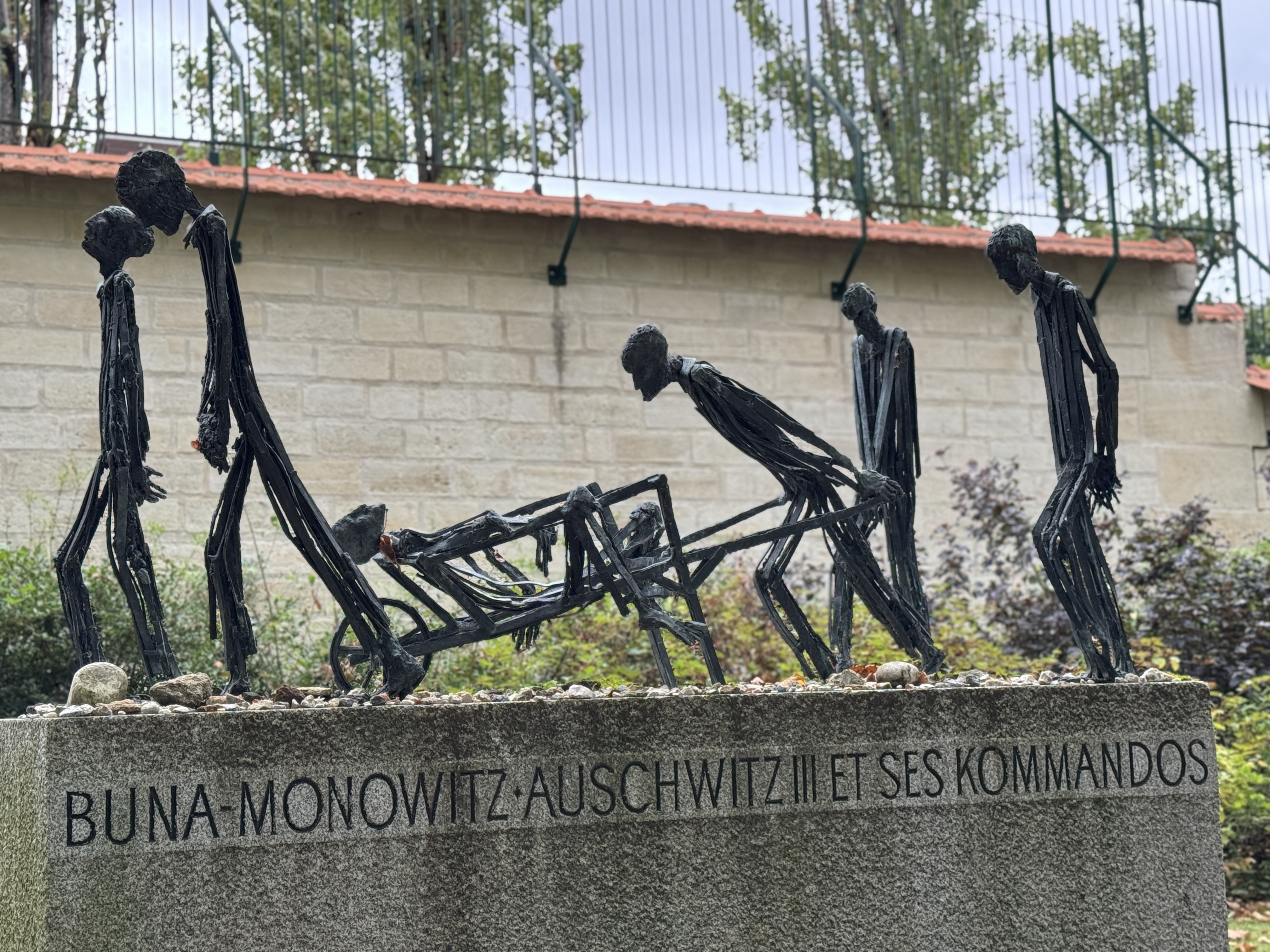
The Holocaust memorials.
Père-Lachaise contains a series of memorials honoring deportees and victims of the Nazi concentration and extermination camps. These monuments create what is essentially a path of remembrance within the cemetery, commemorating people whose lives were destroyed during one of humanity’s darkest periods.
Suddenly, the famous names didn’t seem quite so important.
There were no rock stars here.
No literary celebrities.
No composers whose music had entertained generations.
Instead, there were memorials to people whose names and stories might otherwise have been lost to history.
We stopped.
We took it in.
And we moved on quietly.
That moment reminded me that Père-Lachaise isn’t simply a cemetery filled with famous people. It is a place of memory in its broadest sense. Some people are remembered by millions. Others are remembered by generations of families. And some are remembered collectively because history must never allow their suffering to disappear.
A Photographer’s Paradise
From behind the camera, Père-Lachaise presented an entirely different attraction.
The cemetery is visually extraordinary.
Weathered stone.
Elaborate mausoleums.
Iron gates.
Sculptures slowly changing beneath the elements.
Moss-covered monuments.
Massive family crypts standing beside simple graves.
Ancient trees creating canopies over winding paths.
Light filtering through the branches.
There was beauty everywhere, but it wasn’t the polished beauty of a museum. It was aged, imperfect and authentic.
For a photographer, that makes it irresistible.
I found myself photographing details rather than simply looking for famous names. The texture of an old monument. The expression on a weathered sculpture. The way sunlight fell across a pathway. A forgotten corner disappearing behind vegetation.
Père-Lachaise seemed to invite you to slow down.
And that’s perhaps the greatest irony.
We entered with a very specific destination in mind.
Jim Morrison’s grave.
But the cemetery kept giving us reasons to stop.
Oscar Wilde.
Chopin.
Piaf.
Rossini.
Architecture.
Sculpture.
History.
Memory.
And, eventually, the sobering memorials that reminded us of the millions whose stories should never be forgotten.
More Than a Bucket-List Stop
When we travel, Rosemary and I try not to simply collect destinations.
We collect experiences.
That’s part of what I hope Exploring with Rob will always be about.
Sometimes the experience is standing beneath the Eiffel Tower. Sometimes it’s sharing a meal in a small Parisian café. Sometimes it’s discovering an extraordinary piece of architecture while walking down an unfamiliar street.
And sometimes…
You go looking for a rock star’s grave and discover an entire world of history.
Père-Lachaise was supposed to be a quick visit.
It wasn’t.
I went looking for Jim Morrison.
I found Oscar Wilde, Frédéric Chopin, Édith Piaf and Gioachino Rossini.
I discovered one of the most remarkable cemeteries I have ever photographed.
I walked among centuries of art and architecture.
And I stood quietly before memorials that demanded something very different from admiration: remembrance.
Perhaps that’s what makes travel so rewarding.
You can plan your itinerary, make your reservations and highlight every destination on the map.
But the experiences that stay with you are often the ones you never planned.
And as I stood there at Jim Morrison’s grave, surrounded by the silence of Père-Lachaise, one thought seemed particularly appropriate:
When the music is over, the memories remain.
Final Exposure
I arrived at Père-Lachaise with one photograph in mind.
I left with an entirely different collection of memories.
That’s the beauty of exploring.
You never really know what you’re going to find.
And sometimes, the most meaningful destination is the one you didn’t know you were looking for.