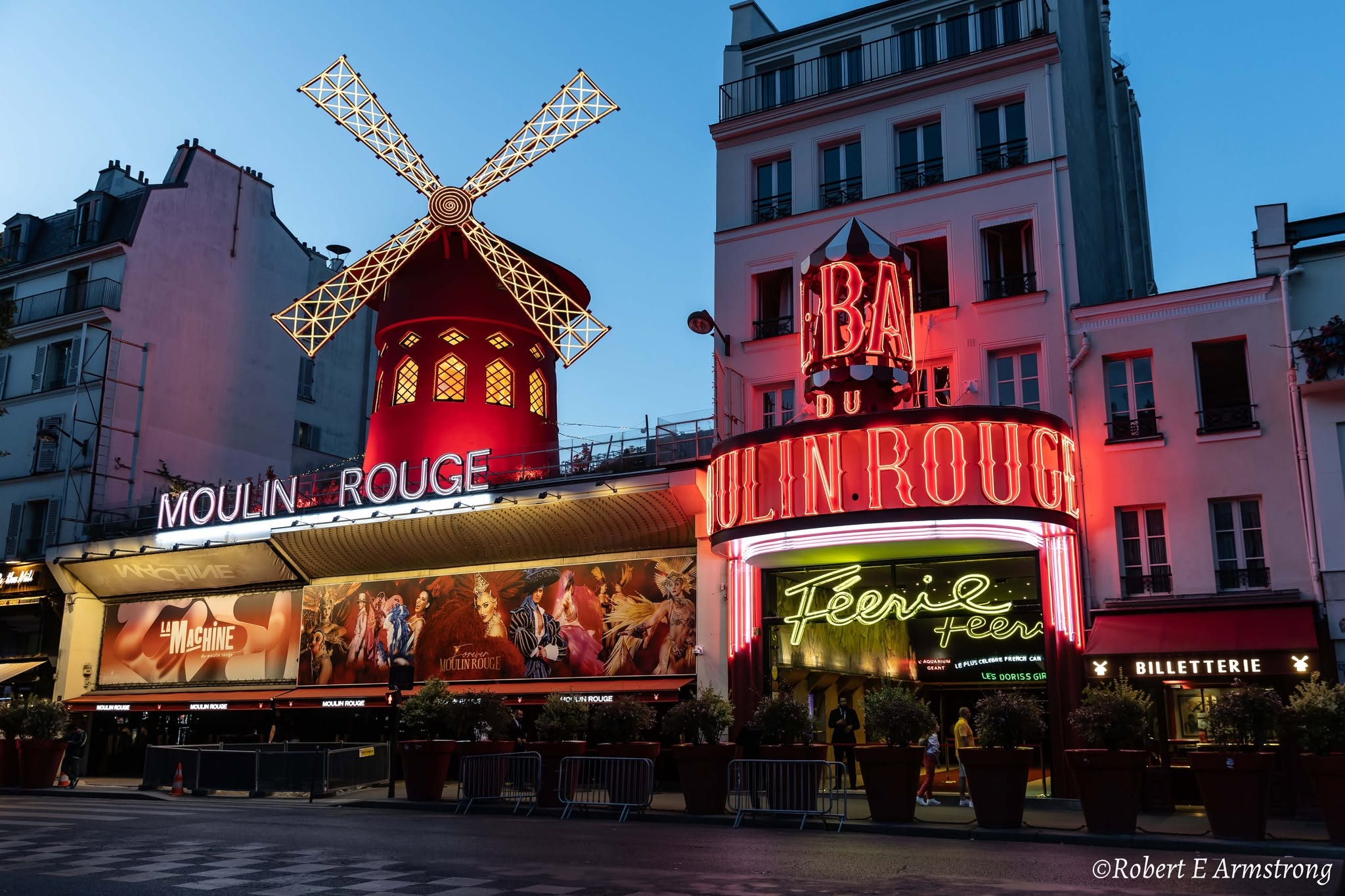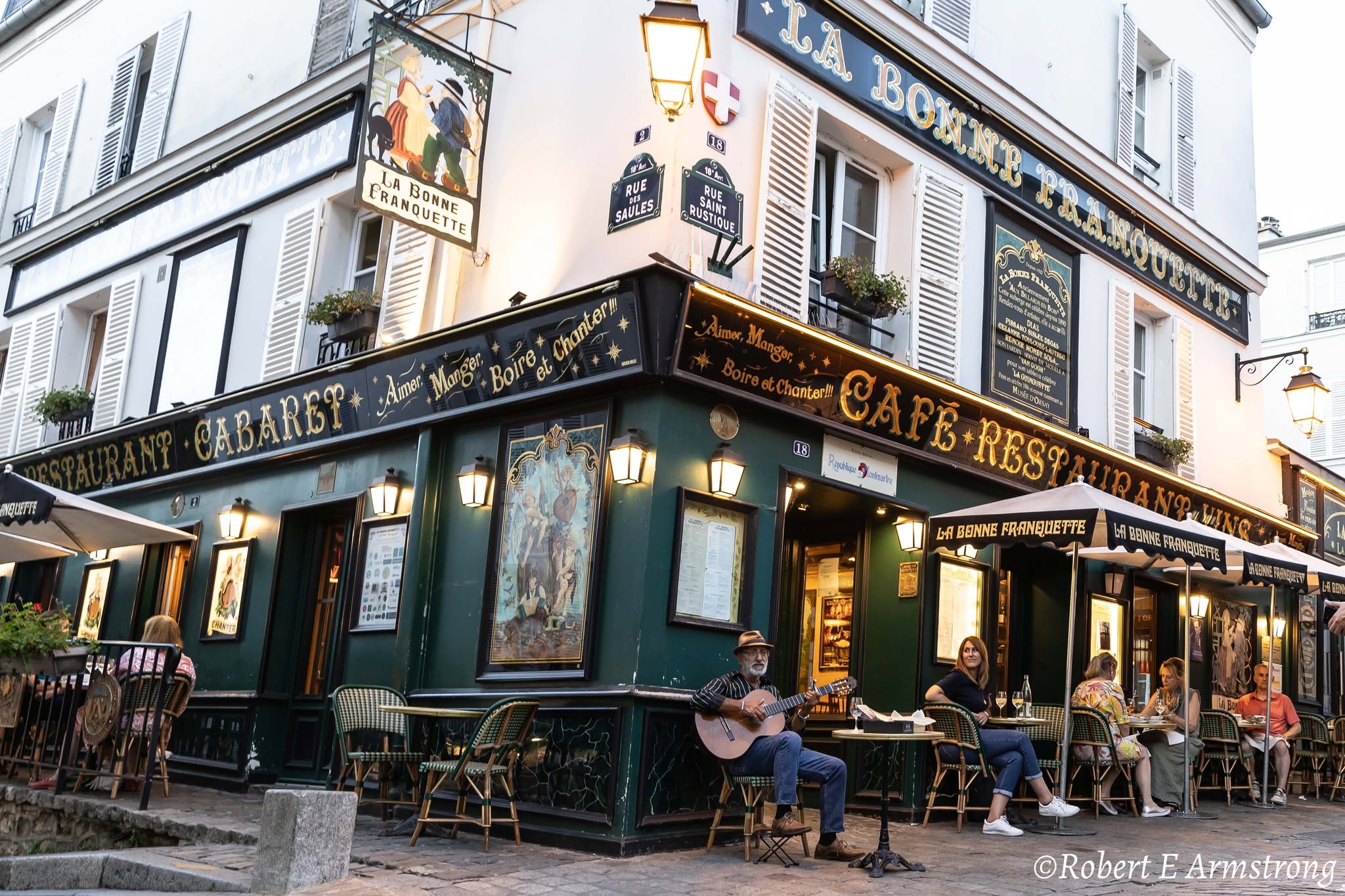
I’m one of those travelers who prefers not to have a rigid itinerary. I like to wake up when I wake up—although I’m usually an early bird—enjoy a leisurely breakfast, and see where the day takes me. Rosemary, on the other hand, likes to have a plan. She enjoys knowing what the day holds instead of flying by the seat of her pants.
As we settled into our room at Le Chat Noir the evening before, she asked if I’d be interested in taking a walking tour through the Montmartre district, just steps from our hotel. Since we had no plans for the day and I was eager to explore another corner of Paris, I gladly agreed. Looking back, it was one of the best decisions we made during our stay.
Fortunately, our hotel offered a wonderful breakfast, so we fueled up before setting out on our adventure.
Our tour began at Place Émile-Goudeau, beside one of Paris’s iconic Wallace Fountains. These elegant dark-green cast-iron fountains have become part of the city’s identity since they were donated by British philanthropist Sir Richard Wallace following the Franco-Prussian War in the 1870s. Designed to provide clean drinking water for everyone, each fountain is supported by four graceful caryatid figures representing Kindness, Simplicity, Charity, and Sobriety. Once you learn their story, you begin noticing them throughout Paris.
From there, we wandered through Montmartre’s charming streets toward one of the neighborhood’s most recognizable landmarks—Le Moulin de la Galette.
Today, the famous windmill sits above an exceptional French restaurant, but centuries ago it was one of many windmills that dotted the hillside when Montmartre was still a rural village surrounded by vineyards. Art lovers will immediately recognize it from Pierre-Auguste Renoir’s masterpiece Bal du moulin de la Galette. Standing there, it’s easy to imagine the artists, musicians, and dreamers who found inspiration in these very streets.
Our next stop was one of Montmartre’s most unusual attractions—Le Passe-Muraille, or The Man in the Wall.
Tucked away in Place Marcel Aymé, the bronze sculpture depicts the fictional character Dutilleul from author Marcel Aymé’s beloved short story about a man who mysteriously discovers he can walk through walls. At first, his extraordinary gift seems like the perfect superpower, but eventually it becomes his undoing when he finds himself permanently trapped inside a wall. Sculpted by actor and artist Jean Marais, the statue captures that exact moment. Local tradition says that shaking his outstretched hand brings good luck. Naturally, I wasn’t about to pass up an opportunity for a little extra luck while wandering through Paris.
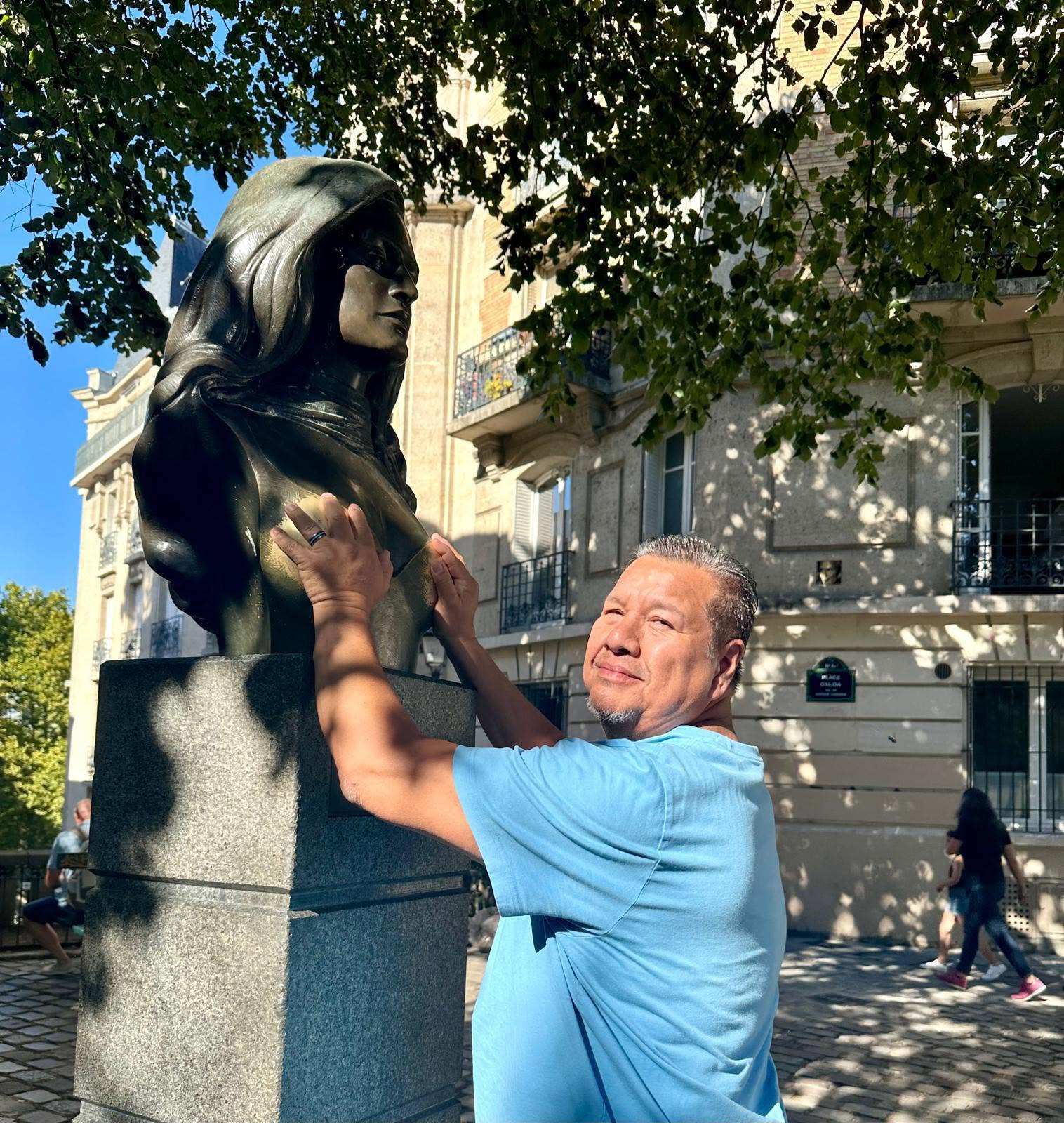
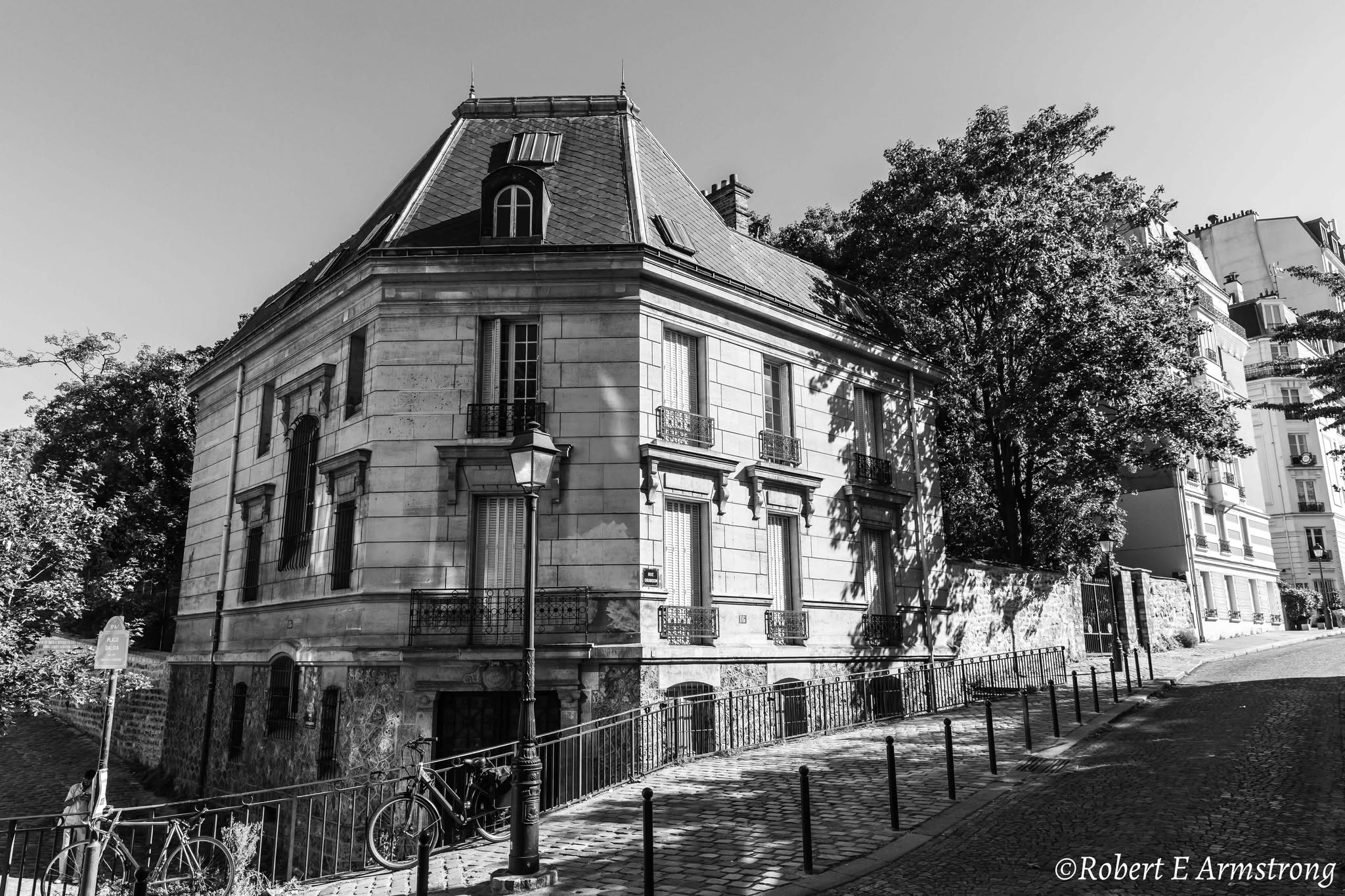
A short stroll brought us to the quiet little square known as Place Dalida.
Dalida was one of France’s most celebrated entertainers, and she called Montmartre home for many years. Following her passing in 1987, the neighborhood honored her with this peaceful square and bronze bust. Over time, another tradition developed. Visitors gently rub the bust while making a wish, which explains why parts of the bronze have been polished to a brilliant golden shine.
Of course, I couldn’t resist trying my luck.
As of this writing, I’m still waiting to win that lottery jackpot, but perhaps Paris has a different definition of good fortune.
Continuing through the neighborhood, we arrived at one of Paris’s best-kept secrets—the Clos Montmartre Vineyard.
Hidden behind wrought-iron fencing on Rue des Saules, the vineyard was planted in 1933 after local artists and residents successfully fought to save the property from commercial development. Although visitors can’t freely wander among the vines, simply peering through the gates offers a fascinating glimpse into what Montmartre looked like before it became one of the world’s most famous neighborhoods. Every autumn, the vineyard comes alive during the Fête des Vendanges, Montmartre’s annual wine harvest festival, celebrating a tradition that stretches back centuries.
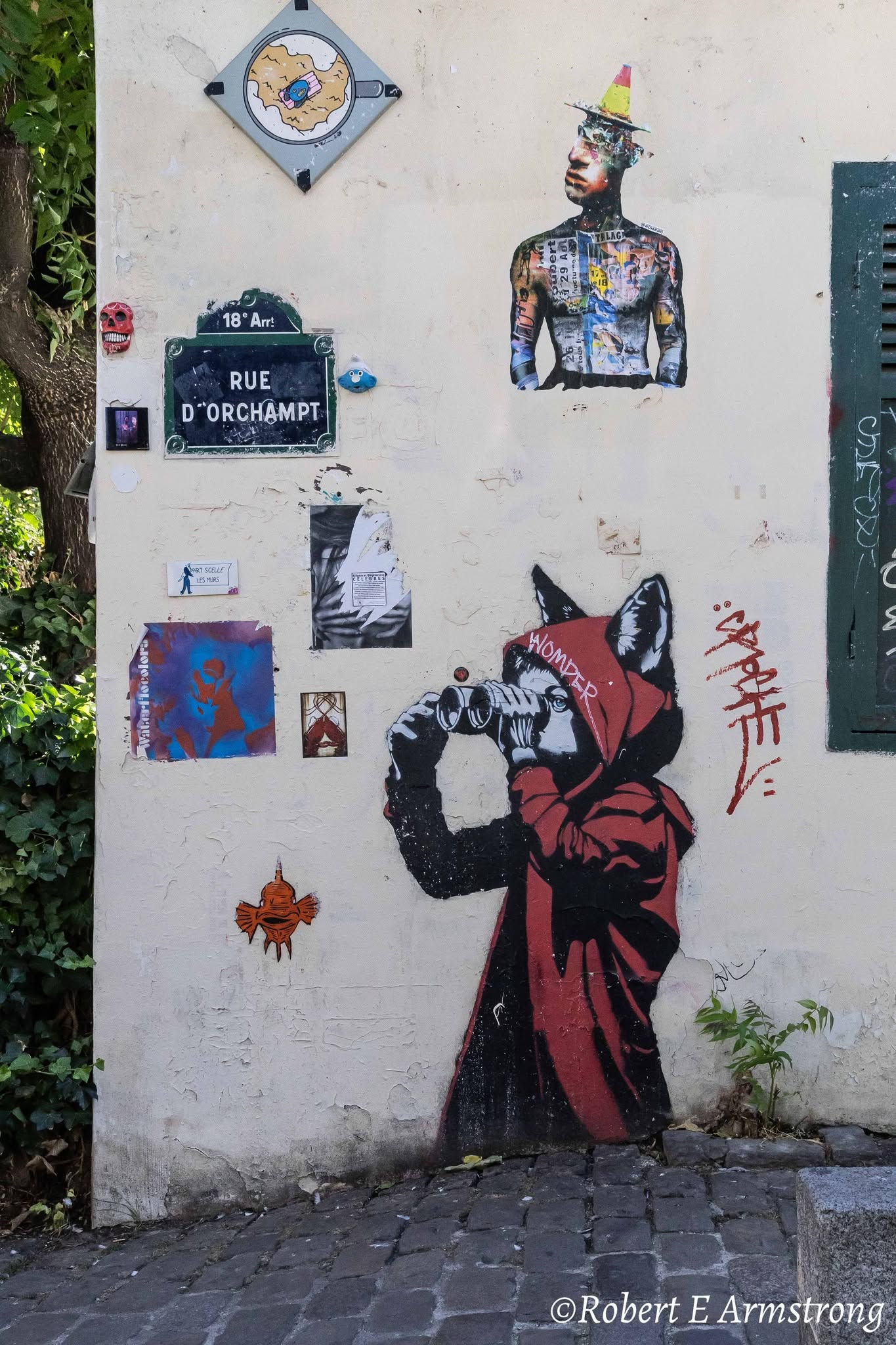
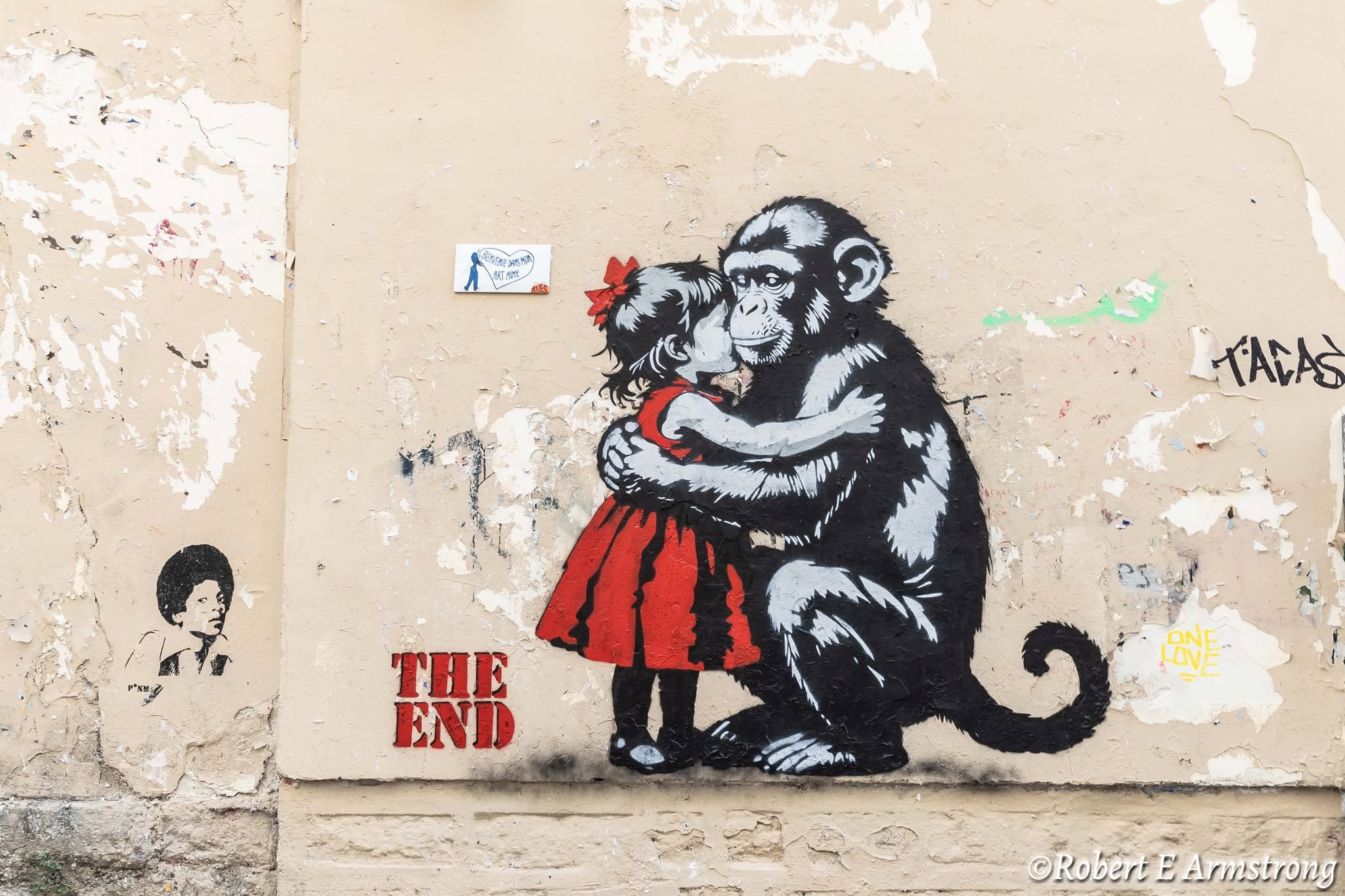
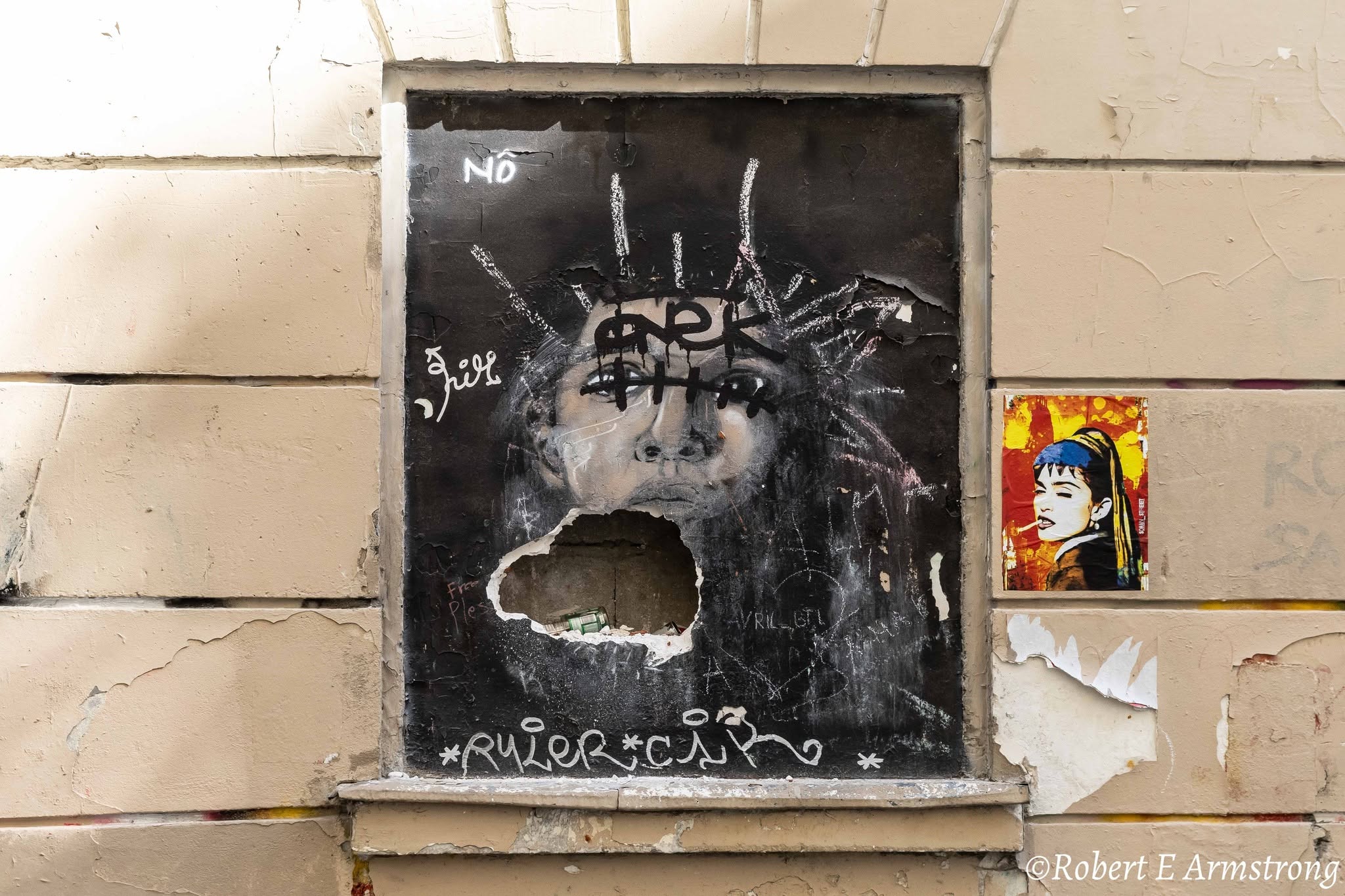
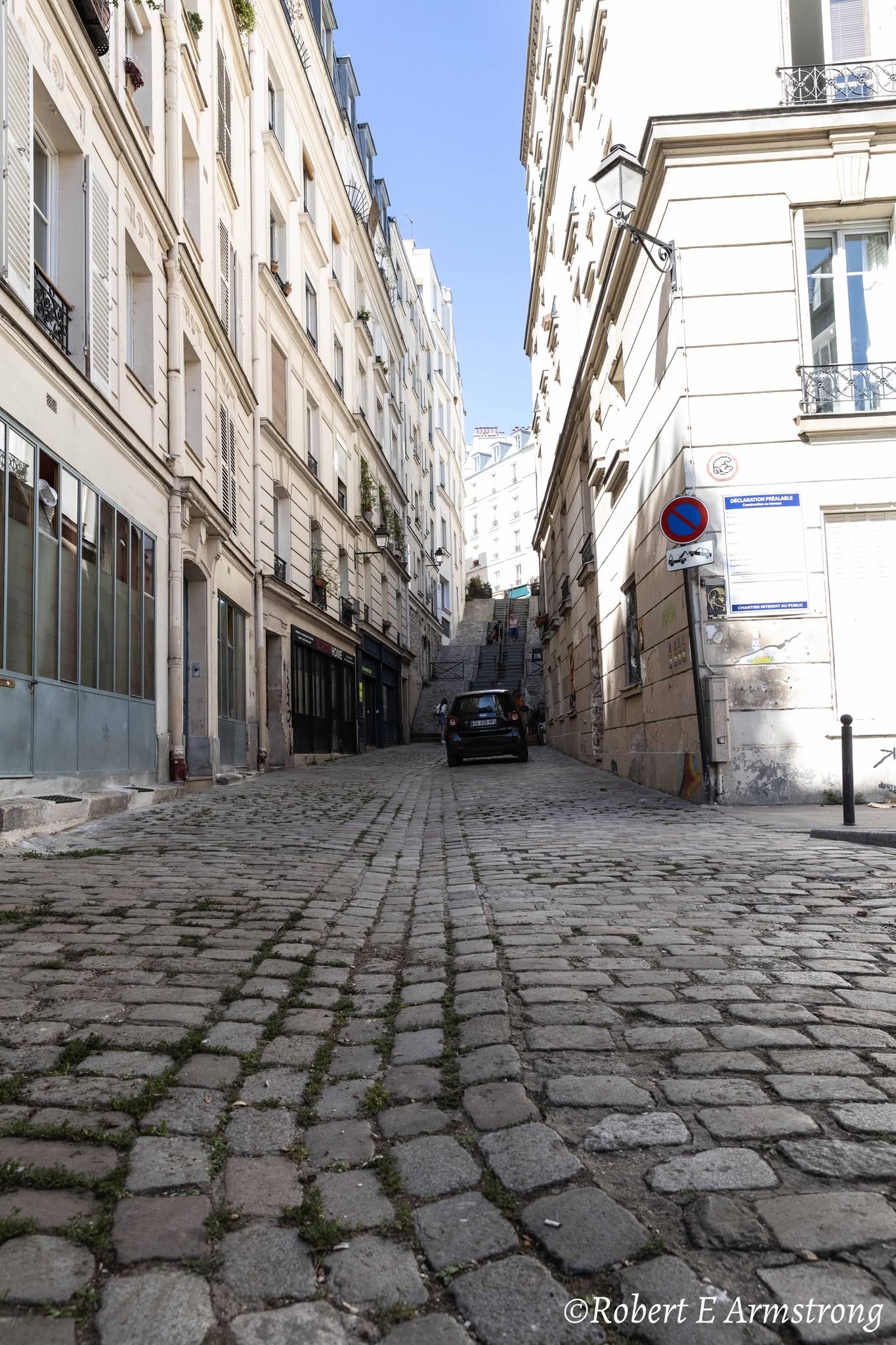
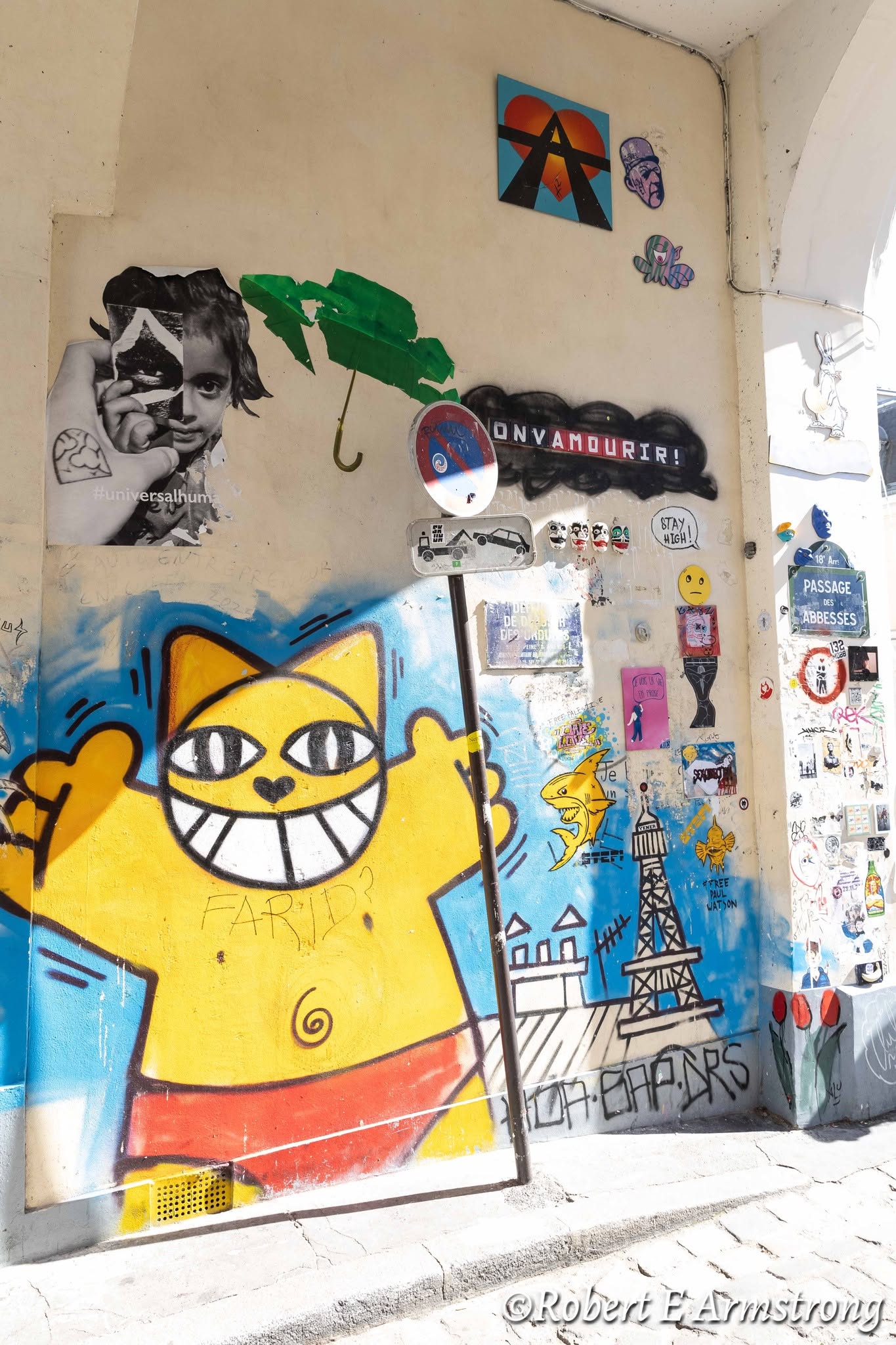
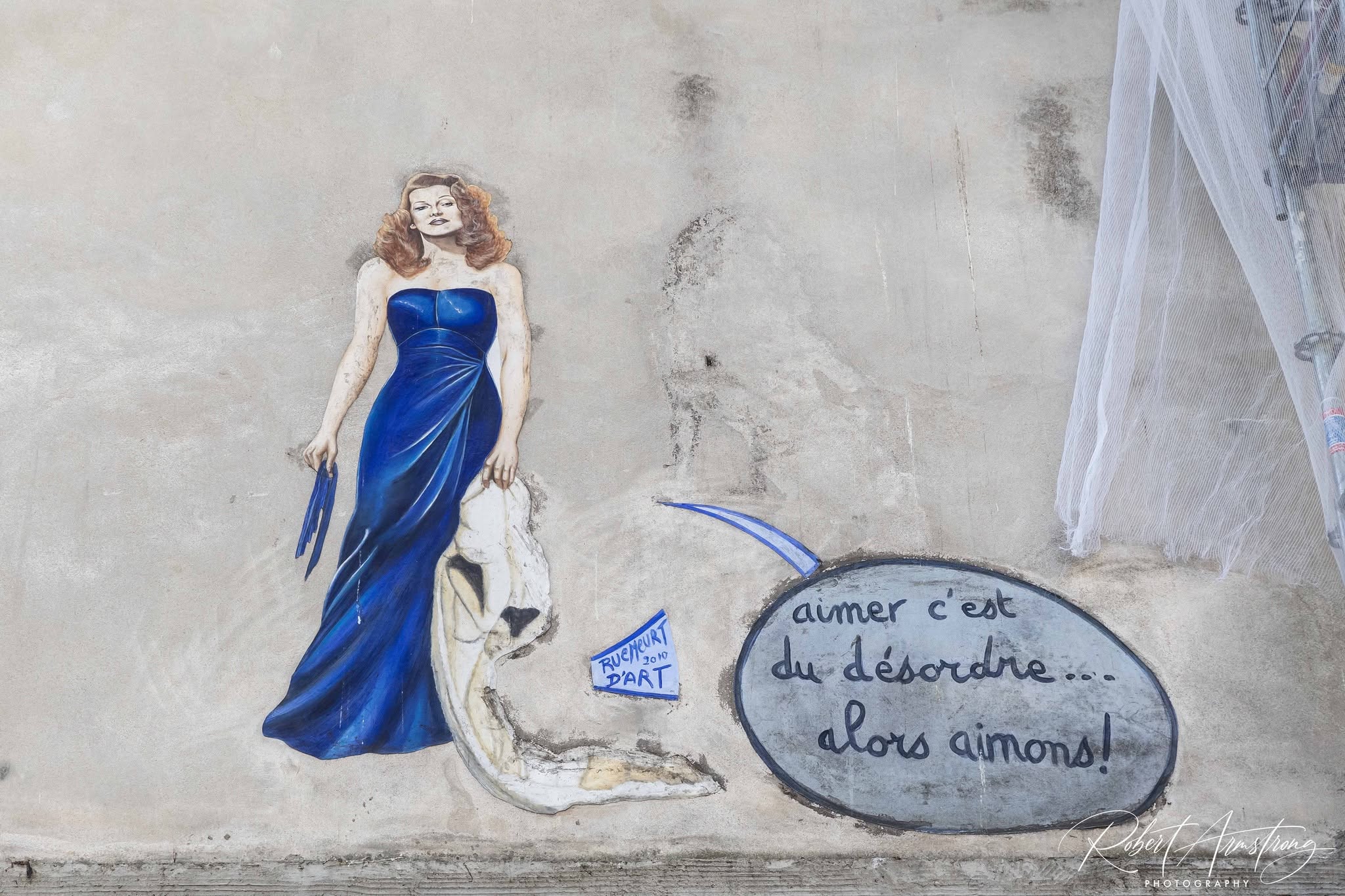
As we continued our walk, the streets became busier, artists filled nearby squares, cafés spilled onto the sidewalks, and musicians provided the soundtrack to our climb. Every corner seemed to reveal another hidden doorway, colorful mural, or quiet street that begged to be photographed. It’s easy to understand why generations of painters, writers, musicians, and photographers have fallen in love with Montmartre. The neighborhood doesn’t ask you to rush. It invites you to slow down.
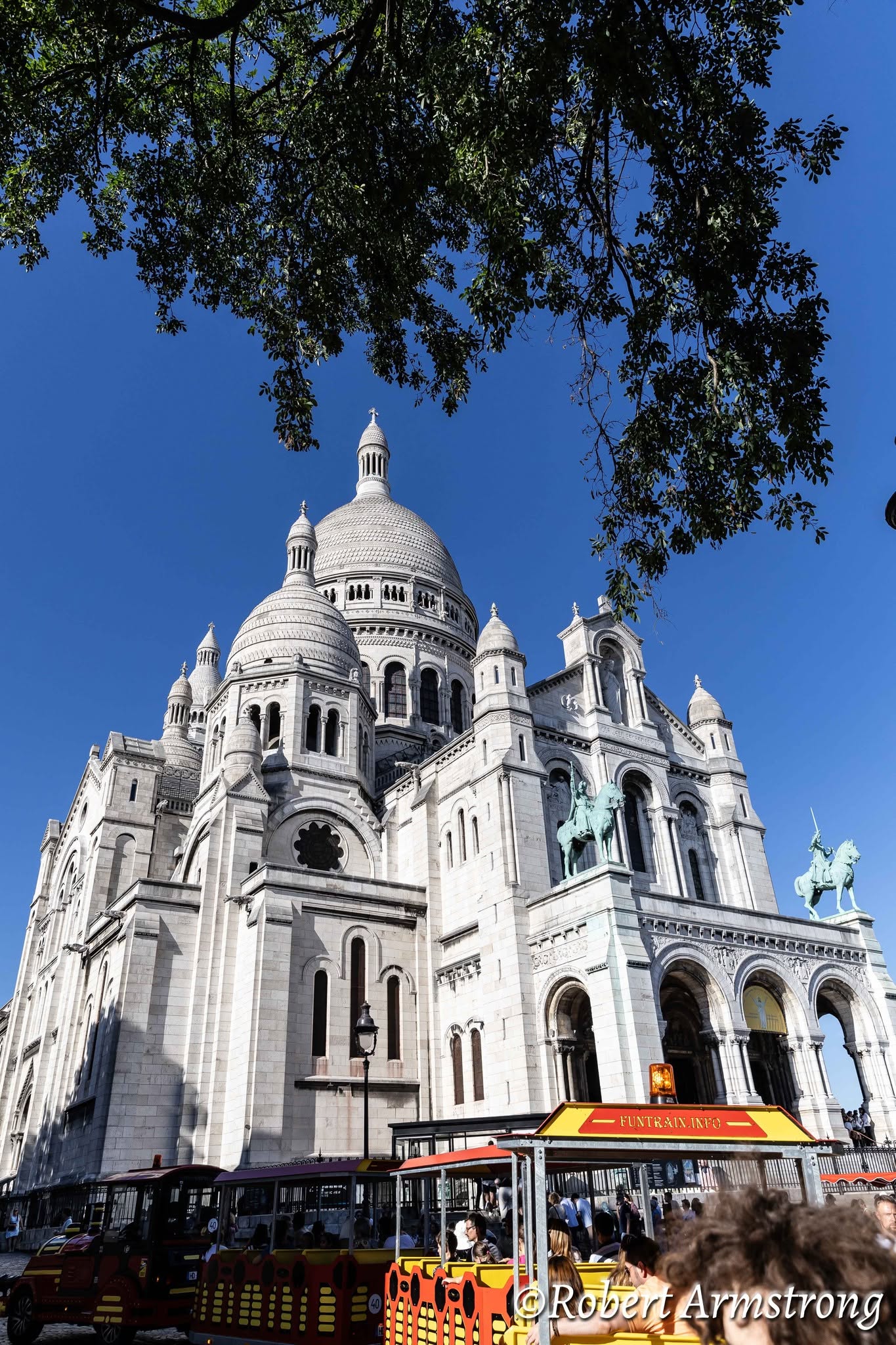
Eventually, we reached the steps leading to Sacré-Cœur Basilica.
By this point, Rosemary had already shared one important lesson she had learned during the month she spent in Paris before I arrived. While visiting landmarks such as the Arc de Triomphe and several other historic attractions, she quickly discovered that many of Europe’s centuries-old monuments were built long before elevators were ever imagined. If you want to experience them beyond the ground floor, be prepared to climb.
So when we purchased tickets to ascend the dome of Sacré-Cœur, I knew exactly what to expect—or so I thought.
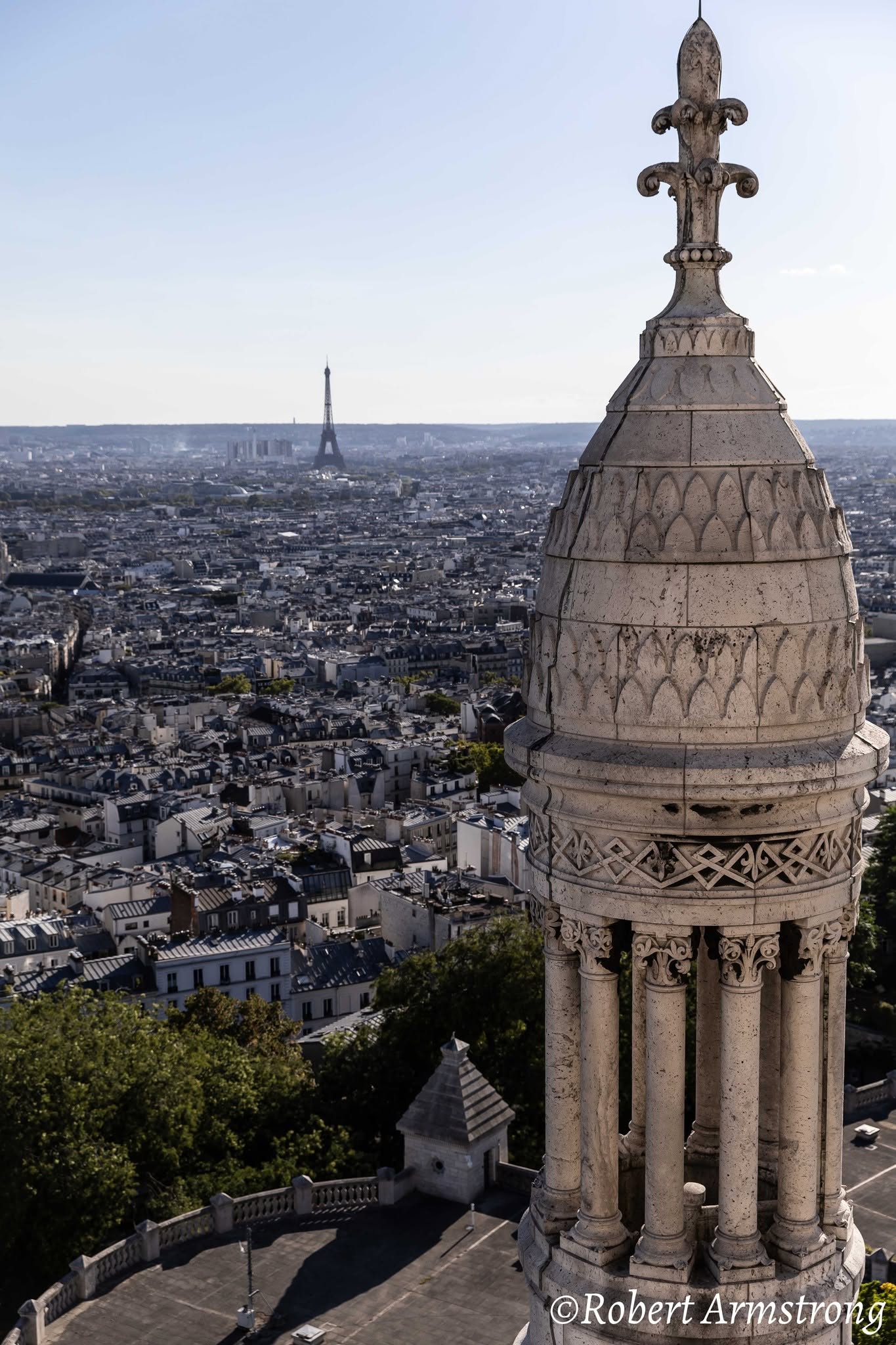
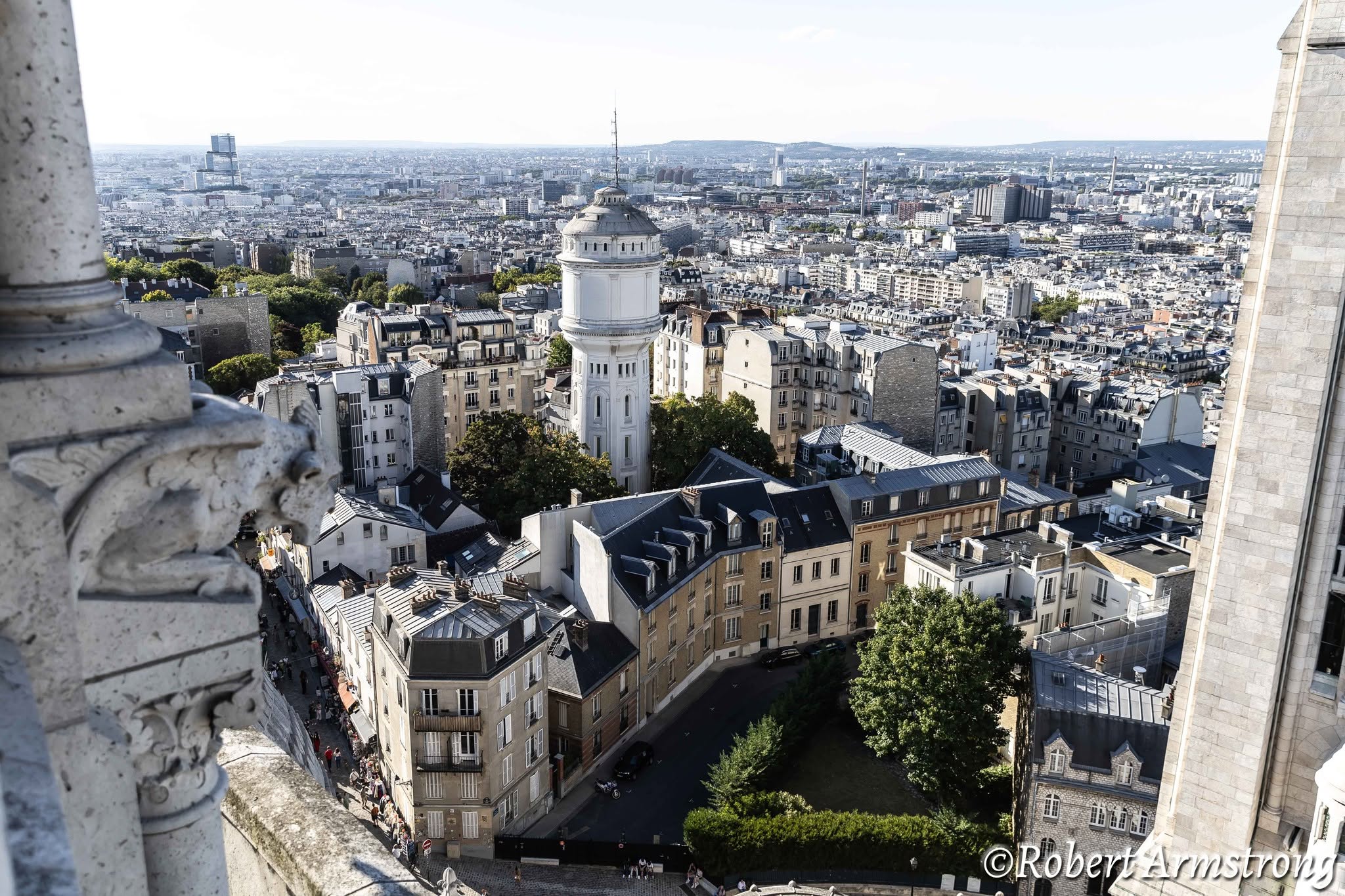
The journey to the top isn’t simply a staircase; it’s an adventure in itself. At times, the route becomes a maze of narrow spiral staircases that seem to wind endlessly upward. Just when you think you’ve reached the top, a doorway opens onto an exterior walkway before leading you back inside to yet another tight staircase. It feels as though the architects were determined to test both your legs and your sense of direction before rewarding you with the summit.
Every step was worth it.
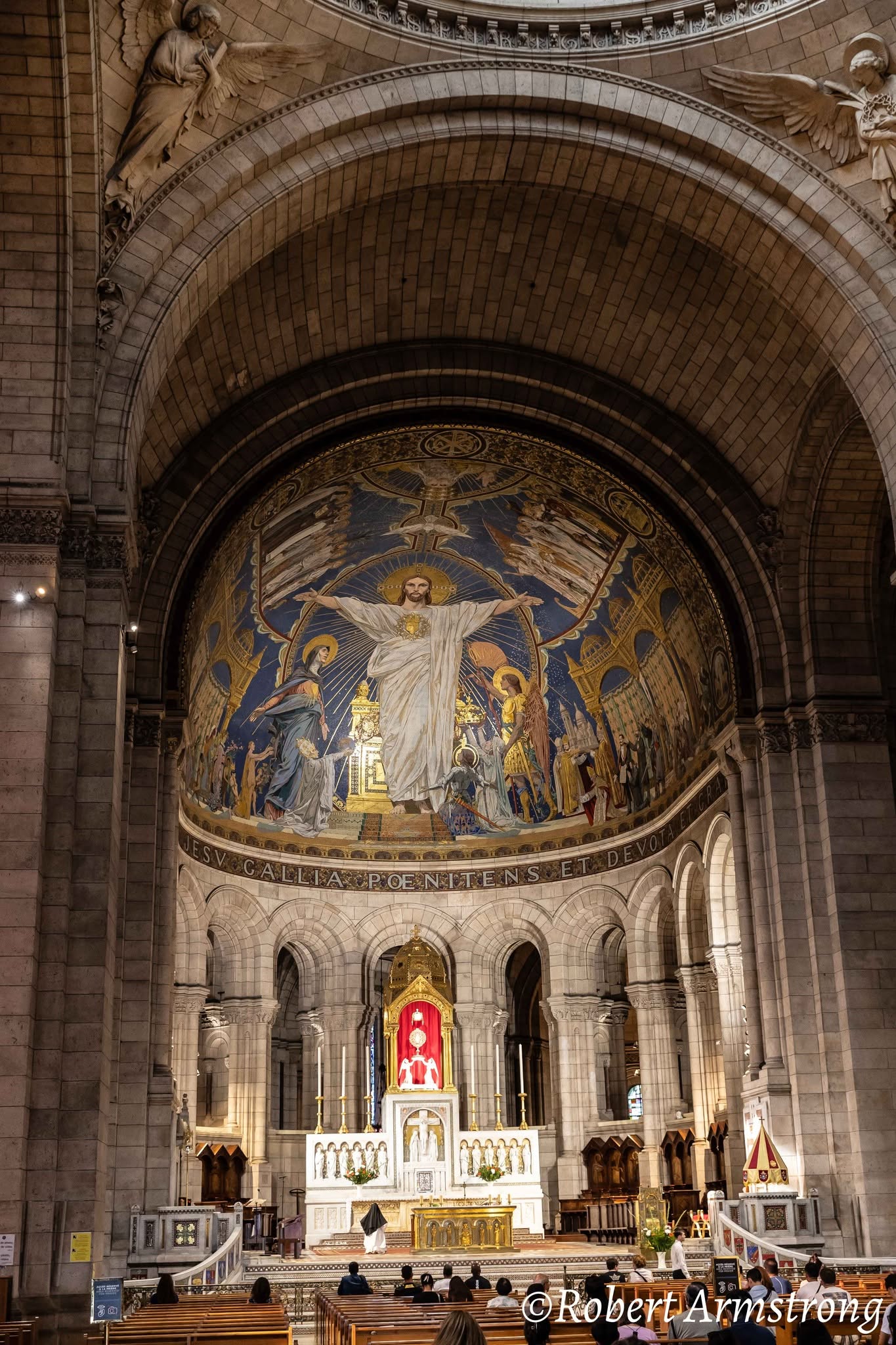
Standing high above Paris, with the city stretching to the horizon in every direction, it’s easy to understand why so many visitors make the climb. The panoramic view is breathtaking, but stepping back inside the basilica is equally unforgettable. Its soaring domes, remarkable mosaics, and peaceful atmosphere invite you to slow down and simply take it all in.
While I wouldn’t describe myself as particularly religious, I do have a deeply personal spiritual relationship with God. Walking through Sacré-Cœur, I experienced an overwhelming sense of peace and welcome, as though I had been invited into His house. It was one of those rare moments when history, architecture, and faith seemed to come together in a way that left a lasting impression—one that no photograph could ever fully capture.
As we made our way back down the hill, I realized that Montmartre had given me far more than I expected. Yes, I had photographed famous landmarks, discovered hidden corners, and learned fascinating stories about the neighborhood’s past. But what I’ll remember most are the moments in between—the laughter, the unexpected discoveries, the winding streets, and the simple joy of exploring without feeling rushed.
Sometimes the best travel memories aren’t found by checking destinations off a list. They’re found by wandering through a neighborhood with someone you love, allowing curiosity to lead the way. Montmartre reminded me that while photographs preserve the places we visit, it’s the experiences behind them that become the memories we treasure long after we’ve returned home.